Follow-up to the Author’s Publishing Jungle

Last week’s post “The Author’s Publishing Jungle” engendered quite a bit of interest here and on Facebook. Authors and would-be authors chimed in on myriad experiences with publishing their work. On closer questioning on my part (after all, I’m a former reporter), it seemed not all publishing experiences are created equal. Even the language of publishing itself had different meanings, depending on who you talked to.

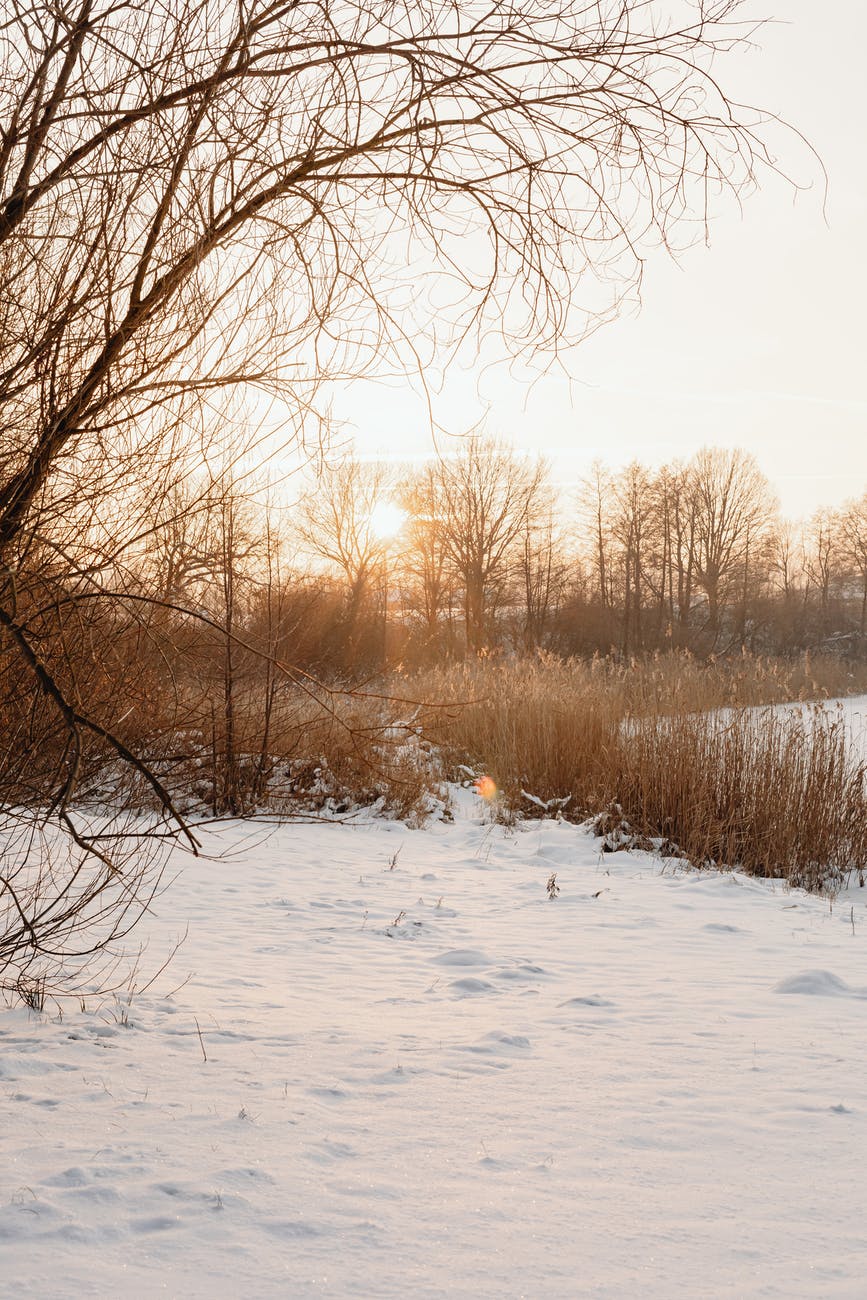
Photo by Jacob Colvin on Pexels.com

For example, whether formatting a manuscript yourself for free through KDP or hiring someone to do it (not clear who they were or how people found them and will they be around in two years to make updates or do you have to know how to do that?), questions for me remain. And what does the end product look like?

Whether working with small presses versus university presses or hybrid publishers (a term that seems to have a somewhat amorphous definition, depending on who you talk to) divergent opinions left me with questions. (If I were writing a memoir with a lot of history and historic relevance, I would definitely consider a university press, which one writer over on the National Association of Memoir Writers’ Facebook page suggested.) What about royalties or creative control?

I have been in the “game” of self-publishing since 2010 and I’m still convinced it’s the way to go, at least for my work. Ever since 2010, I never again queried a small press. Why? One of the reasons was that when I tried to get Again in a Heartbeat published, I was told my memoir could contain libelous material (I wrote about dating various men) and so they were not interested. Another reason was the length of time between submission and publication.

A formatter can be hired, it seems, but what if you want ebook and paperback? Can they do both and make them look right? Others said they loved their book, but it didn’t have all the bells and whistles. I want chapter heading fonts, design fleurons and running heads.

Some experiences went from using a small press to self-publishing. Why the switch?

In my mind, and this is just me talking, there’s a lot of “apples and oranges” comparisons going on when people talk about publishing a book. One book may not resemble what I envision for my book but might be fine for another. The book I want requires professionals who have skills I don’t. They should know how to create a good-looking product that resembles any traditionally published book you might find in a bookstore.

As I mentioned last week, I wasn’t willing to break the bank to get my work out there. I had selected BookBaby because I liked the one-stop shopping aspect. The pricing seemed okay since I wanted ISBNs and cover design and interior formatting for print and ebook. People answer the phone after a few rings and their online information/website is impressive. Concerned with the quote I received showing pricing for a trade paperback at $11 (compared to the $4 that I spent in 2015 for my novel of the same length as the new novel), a BookBaby representative clarified that for me this morning. The $11 is the initial price built into and included in the $2,109 self-publishing package. (Basically, those 25 copies become giveaways for marketing or gifts.)

Once I set my own price on Amazon, I pay 50 percent of that, plus or minus, depending on how many copies I order. So, if I set the price at $12.99, I will pay 50 percent of that with discounts if I order 100 books. If I order 50 books, the discount is not as great. That makes sense. The price becomes more reasonable when you factor in inflation and the high cost of paper and that I haven’t published since 2015. I was told they are keeping an eye on the cost of paper and will lower the price if there is a downturn, say, by the end of the year.

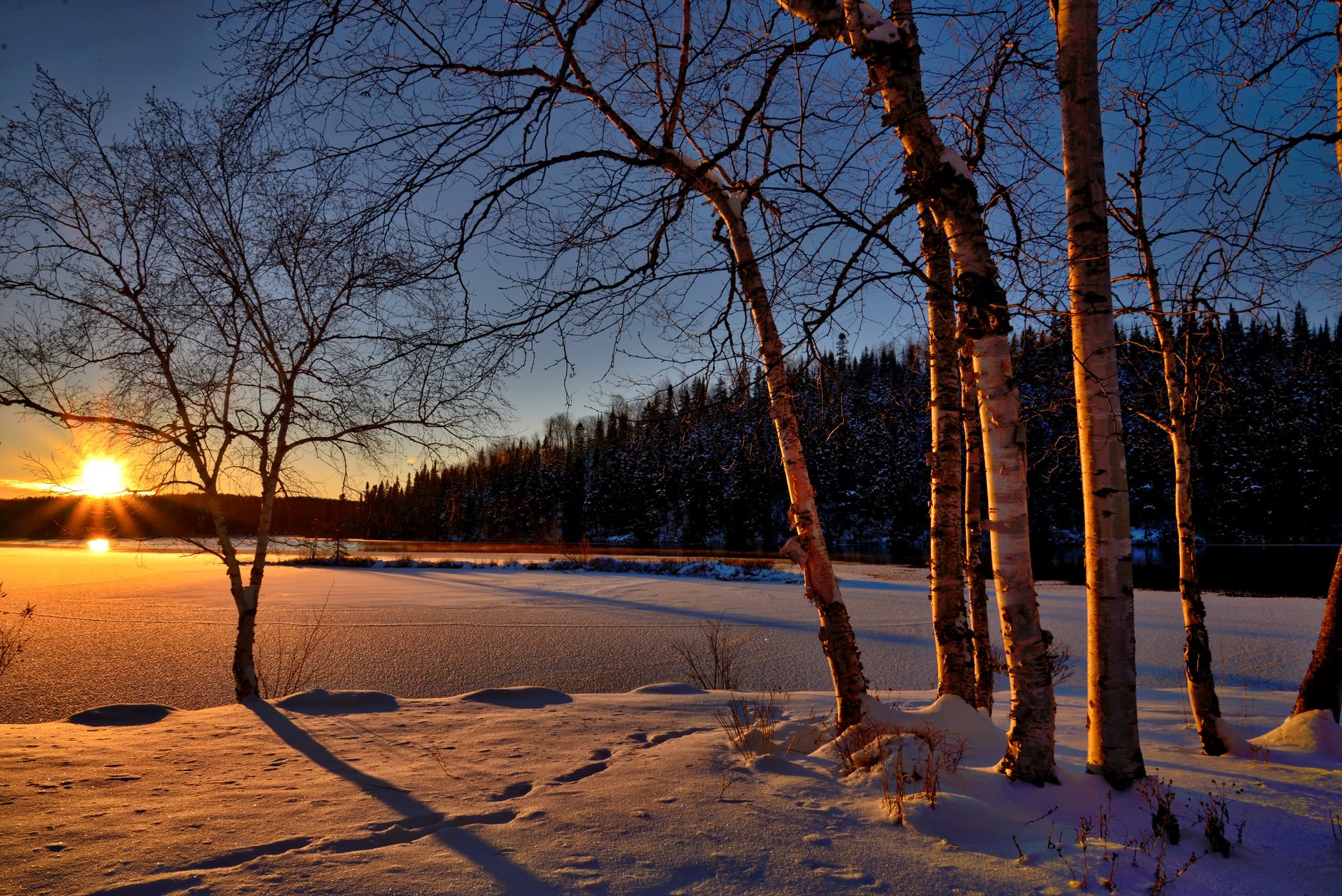
Photo by Ian Turnell on Pexels.com

I don’t pretend to be an expert on the many publishing platforms out there, nor do I have the time or inclination to study all of them. So that leaves me out when it comes to Apple or D2D, or whatever. What I know is that I am a writer and a small entrepreneur. I enjoy book signings, talks in the community and I’m decently adept at social media. (Note: In years past, I’ve tried blog tours and Facebook advertising, Goodreads Giveaways and other promotional book sites to some, but not much success.)

One thing I know is that I can depend on myself, my intuitive and professional savvy in weeding out the scammers and the companies here today and gone tomorrow. Of course, I banked on CreateSpace years ago and now what? They’ve been defunct for the last couple years.

Still, I think I’m at peace with my path “through the jungle.” No one said this business of being an author would be easy.

I would enjoy your thoughts and your experiences,or comments on this topic of publishing and the world of publishing options.
The Author’s Publishing Jungle

Having finally completed my novel, And the Memory Returns, I once again have entered the publishing jungle. My novel, at 40,000 words, is considered “too short” by the established “gatekeepers” to make a marketable novel—the going rate is 60,000 words or more. Nor is the topic idiosyncratic or blatantly catchy or a marketable genre like romance or suspense. A literary fictional story of a woman’s search for meaning as she ages, And the Memory Returns, is probably not going to set the book world afire. Nor can I add to the length when I feel the story is just perfect and compelling, as is.

How could I publish my book? I’m not willing to wait years required by the traditional publishing industry to see my book make it into readers’ hands, even if an agent would want my story.

Photo by Pixabay on Pexels.com

So it was that I began the quest to find a self-publishing company that offered the services I needed, hopefully, without breaking the proverbial bank. I heard from so many “vanity” publishers under the guise of “small publishers” that my head began to spin. Somehow, they even got my phone number. One talked to me over an hour as to how I had to consider my book a “spiritual endeavor” and put all my heart and soul into it, including setting myself up with a website as a speaker at national events. All for a fee, of course.

Another pretended to be a “traditional” publisher by saying publishing my book would end up costing me nothing. We accept your manuscript, they said, (without even reading it) because we know you have the “following.” But remember, we don’t accept just everyone. Upon further evaluation and emails back and forth, I learned I had to crowdfund $6,000 to meet their expenses of formatting, editing and cover design. Were they kidding? Not a fan of crowdfunding even for noble causes, I wasn’t about to ask friends and colleagues if they would donate to my publishing endeavor and then buy my book too.

For now, I have landed at BookBaby, a one-stop shop, much like Amazon’s CreateSpace, now defunct, which I used with great success to publish both my memoirs and my first novel. Except at CreateSpace, you got two cover samples. This time, just one. I have to write my own synopsis and prepare notes on my design, front and back, and hope that the one and only sample I am offered works.

I never had to worry whether my manuscript was properly formatted because I was paying CreateSpace to do that. And there were no additional charges with CreateSpace for fixing minor typos. Now, I need to consider that if my manuscript isn’t pitch perfect, there are additional fees. For example, fixing typos begins at a base rate of $50 and then $2 for every typo after that. Fair enough, although it makes me nervous since attempting to ensure the manuscript is flawless, without having to spend another several hundred dollars on copy editing or proofreading off the base price of $2,190, not including taxes, is a bit intimidating. That price is based on a shipment of 25 paperback books. Price goes up by just over $11 for every paperback I purchase, far above the approximately $4 which I spent at CreateSpace for a book of the same length and page count. (BookBaby did waive the shipping fee of $90 for 25 books because I live within an hour of their printing distribution center.) The pricing means I have to charge at least $15 to make even a little money off sales of the paperback. I can set my own price for the ebook on Kindle, and will get 70 percent for each sale.

Still, after much research BookBaby came highly recommended by indie publishing groups. And factoring in inflation and the years since I last published, I am getting ready to write the check. That is, unless you know of something better. I’m all ears.

This isn’t to say that I hadn’t already spent $1,350 on professional editing over two iterations of my manuscript because I did. I also had two beta reads, which a writer friend did in exchange for me taking her out to lunch and I’ve read numerous excerpts with feedback in the Women’s Writing Circle. In the end, all my hours of hard work writing the book will end up costing me about $3,500, which is far above the $1,900 I spent seven years ago on editing and CreateSpace.

Will I ever recoup my expenses? Probably not. But it could be worse. I know authors who have spent literally $10,000 or more to publish their work.  I won’t be paying for the marketing package some of them bought. As a former journalist and publicist, I’m hoping I have the tools to do that myself. And the time, of course!  It’s a jungle out there. Yet like most authors, I owe it to myself to “birth this baby.”

I would love to hear your thoughts and experiences in publishing your book.

Writing and Unlocking Grief

When I started the Women’s Writing Circle in 2009, my memoir about the untimely death of my husband from cancer was in an early draft. Although it had been thirteen years since his death, grief lingered. Reading what I wrote to others in the Circle felt healing. I found that going back and sorting through all that happened before and just after his death was not only cathartic but enlightening. Who was that girl who dreamed of Prince Charming riding up on his white horse one day? How did that impact my reaction to his cancer and the effects the disease had on my marriage?

Photo by paul voie on Pexels.com

Grief, we often hear, takes time to pass. But how much time and why do some people remain rooted in their loss, while others find a way to move on? So it was with interest that I read that prolonged grief—defined as ruminating over the death of a loved one (or even a pet) for longer than a year—has now been classified a clinical disorder in the DSM5 (the Diagnostic and Statistical Manual of Mental Disorders) – the bible of modern psychiatry. Rather than classified as depression, grief, according to psychiatrists, is more closely linked to trauma and post-traumatic stress disorder.

As a writer, I found a natural pathway to understanding the depth of my grief. Once I began writing about John and my love for him, I felt as if he were in the room listening. Listening is important because no judgments are made, rather one talks and another listens. Writing led back to my background. My parents celebrated fifty-five years of marriage, after all, so I felt my marriage would stand the test of time, too. I had these naïve notions that a man could save me and that a marriage lasted forever, when, in fact, the hard truth was that nothing lasts forever. And no one could save me, but me. As I wrote about what I endured right before and after his death, I found myself connecting the dots, so to speak. And although I did go to a professional grief counselor for several months, it was the writing that gleaned the most valuable insights. I did not want to be a widow in black the rest of my life, nor could I quickly move on. I began to accept that John was irreplaceable. Between the anger and guilt that came with wanting the ordeal of his seven-year battle with cancer to end, I felt the deepest sense of loss. I was six months pregnant at the time of his diagnosis of terminal cancer.  As radiation and chemotherapy treatments upended every aspect of our lives, until finally leading to his dialysis and eventual death, I look back on these years as a survivor of PTSD.

The writing led to the realization that loss was rooted in my grief of shattered dreams that we would grow old together. He was, after all, my best friend, my confidant, my lover and husband and the father of my children. The writing also revealed just how lucky I had been to find true love. And, paradoxically, how unlucky to lose him so young. This paradox is at the root of faith. Life is a mystery. It is not ours to question why. I had just turned forty-four at the time of his death. We only had seventeen years together.

If prolonged grief is considered a “clinical disorder”, as the new diagnosis suggests, my instinct is to say that people are not machines. Everyone proceeds at their own pace and in their own time to work through loss. But what I can say assuredly is that writing offers a path forward, a tutorial if you will. It shows us where we have been and where we might be going. I have seen this happen many times in our Women’s Writing Circle. Someone will write about the death of a child, a spouse, a parent, a beloved dog and when they read their work to a group of empathetic listeners, it is as if the weight has begun to lift. Writing helps unlock grief, move toward renewed hope. In grief’s wake, we remember the blessing that is love.

Here’s a link to the New York Times article: “How Long Should It Take to Grieve? Psychiatry Has Come Up With an Answer” :https://www.nytimes.com/2022/03/18/health/prolonged-grief-disorder.html

Writing Workshop for a Difficult World

Due to all that is happening in the world, we need to stop, take stock and let our writing help plumb our feelings and lead to healing and solace. In that vein, I will offer a writing workshop at the Chester Springs Library from 10 to 12:30 p.m. , Saturday, April 9. We’ll have writing prompts, time for free writes, reading our work aloud, and sharing the hope of setting aside time for a creative life.

Writing offers a creative vision to express ourselves, unload ourselves and make our journey universal. As poet Adrienne Rich says in An Atlas of the Difficult World, “We write from the marrow of our bones.” And in that regard, we find authenticity and meaning, putting on paper what we have been longing to say. This is a courageous undertaking, but one in which we rejoice.

The workshop will be limited to 10 people. There is a $20 fee to attend. Please RSVP at susanweidener711@gmail.com.

Susan

“One day I will find the right words, and they will be simple.” ~ Jack Kerouac, The Dharma Bums

Trusting in the Circle of Love

It’s been a year since the debut of Along the Writer’s Way. As I look back, I am struck by the words, yours and mine. I so appreciate the ‘likes’ of my fellow bloggers, your thoughtful comments and the guest blog posts that have made Along the Writer’s Way personal and special.

Photo by Magda Ehlers on Pexels.com

I wrote my first blog post in August 2009 on my website Women’s Writing Circle. Over 400 blog posts later, posts that ranged from finding a creative vision to honoring our voice in a circle of women writers, Google took down my site. The reasons remain unclear. I decided this time last year to start a new website, powered by WordPress, which is Along the Writer’s Way. So here we are.

That first post I wrote almost twelve years ago was dedicated to “my sisters in the writing circle”. As I wrote then, “women have to draw on their own reserves of creativity, capability and fortitude to make a meaningful life, sometimes against all odds. Women want to document their journey, express their creativity, join with other women in sharing the pain, the frustration and the wonder of being women. I know. I am one of them.”

I also wrote my belief that women confront the lonely life more often than men. This has, unfortunately, been intensified by Covid, evidenced by the many books and articles written about “an epidemic of loneliness.” Writing retreats and workshops, those special places and events where women listened to each other, shared their work and blossomed in a garden of wisdom have yet to revive. I wonder … will they ever? Will life ever be the same again after Covid?

Some things are unknowable.

My happiness is a sense of purpose, of feeling creative and good about my work because work is all we really have. People come and go, marriages end, restaurants close, retail stores will never reopen.

Work never lets you down.

Women’s Writing Circle

I find myself cocooning, pondering what comes next. I still long for new experiences and adventures … I am still “thirsty”. Despite the realities of age, a pandemic and a difficult world, I still believe in new beginnings.

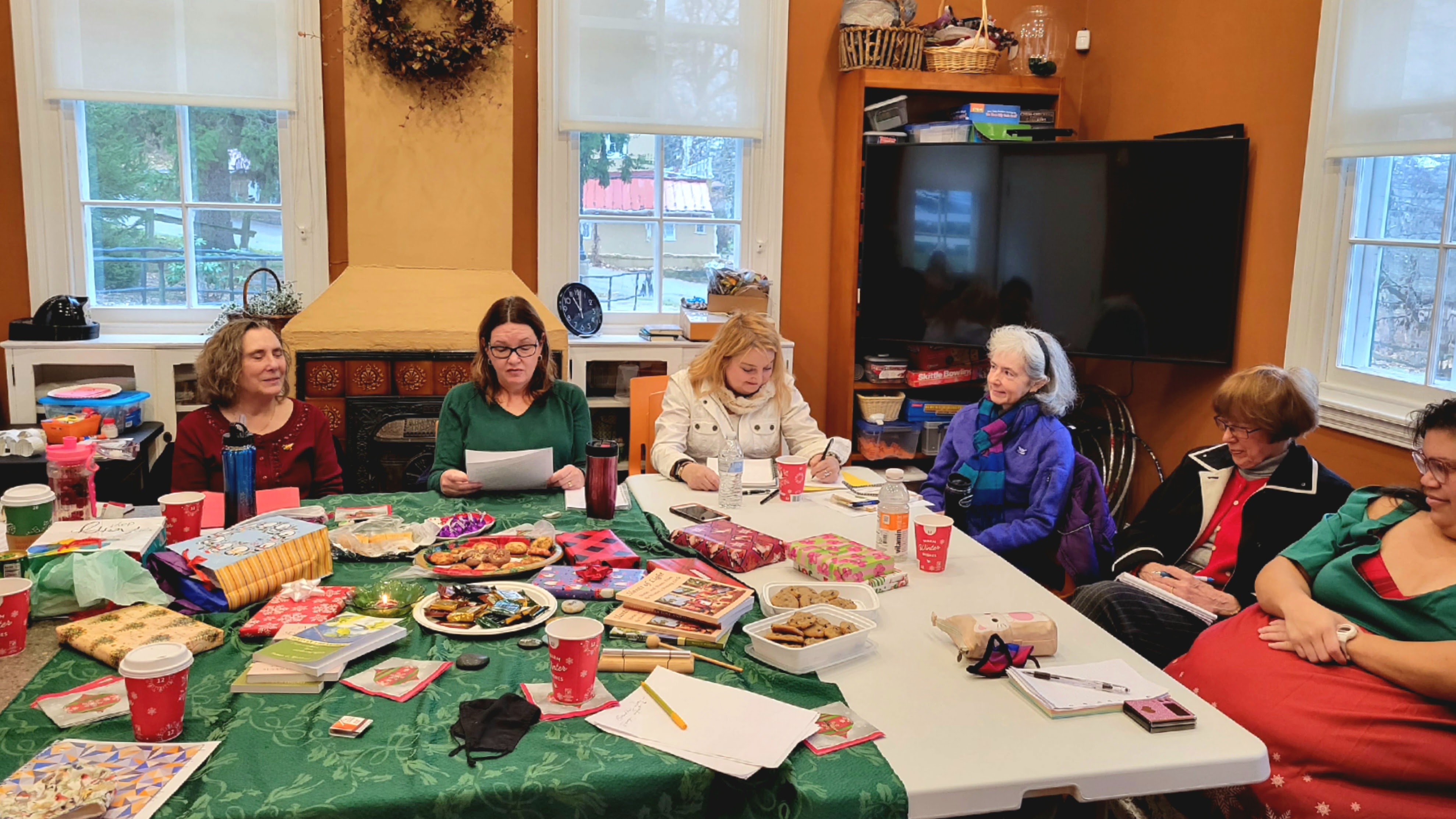
Another year—another year older. Where will it lead? I am trusting in myself and you, my sisters in the writing circle, to write the next chapter here “along the writer’s way.” Will we again dip a toe into community gatherings, feel comfortable meeting in groups, large and small? After almost a two-year hiatus from running my writing group, Women’s Writing Circle started up again in September 2021. Due to the emergence of a new strain of Covid, we went back on hiatus. That setback felt cruel. Yet somewhere between hope and despair, we are restarting read around again in person in our room at Chester Springs Library on March 12. I know you are reading this, hoping you will again meet in your group, attend events and experience the joy of community.

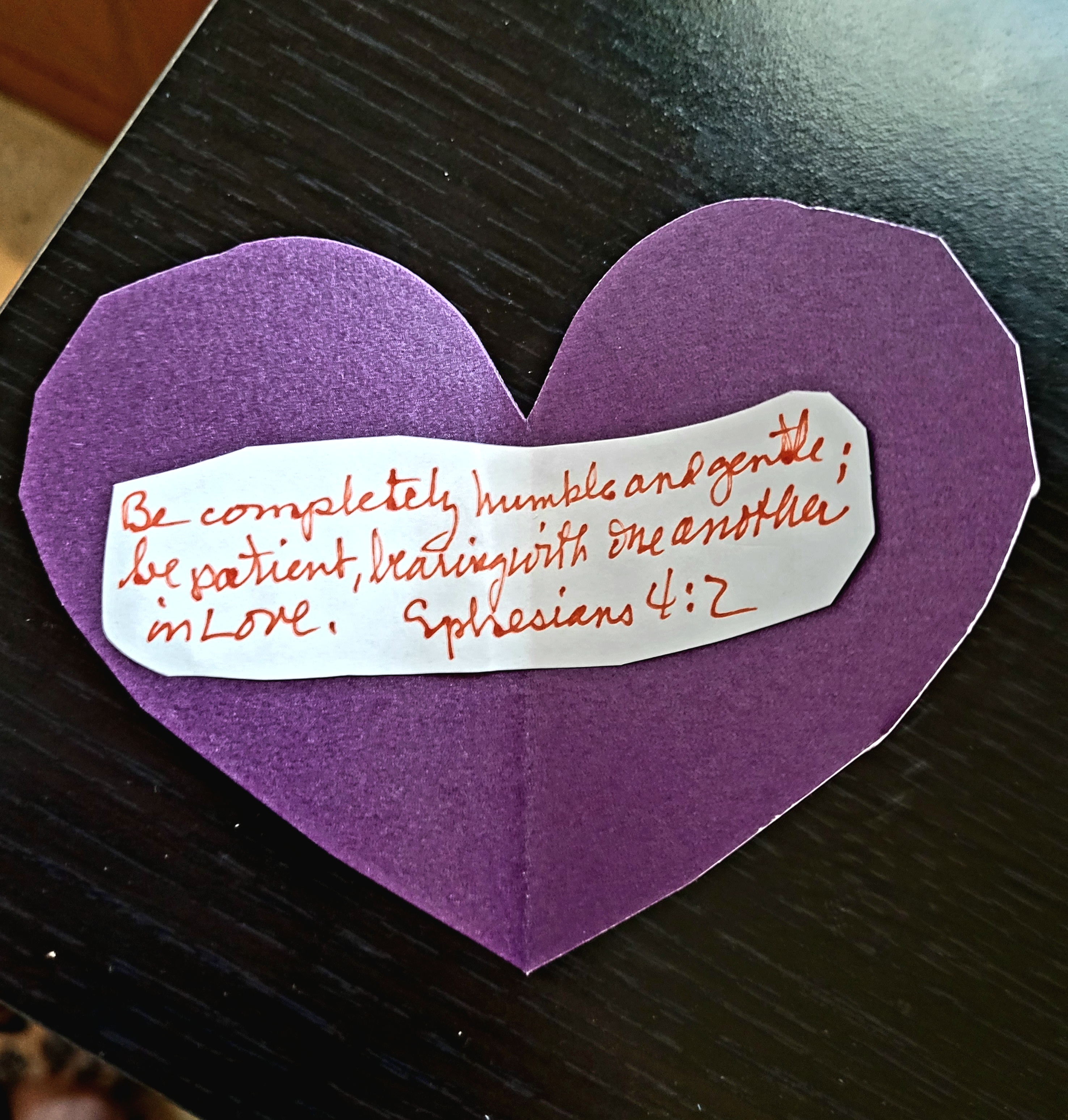
Yesterday in church, I received a Valentine from the young people who handed each of us a heart. Inside my heart was this: Be completely humble and gentle; be patient, bearing with one another in love. ~ Ephesians 4:2. I can’t think of better words to live by, can you?

A Writer Reflects on Winter’s Lessons

Our meditative reflections continue this week with this essay brimming with descriptive images written by Women’s Writing Circle member Marilyn Gilpin, which she read at our December read around.

The Winter Solstice has arrived, marking the start of what may be a long cold lonely winter.  It is, however, a time to rejoice now that the days begin to lengthen and this ghastly, dreadful, appalling year will soon be history. 

The ancients had it right:  the Solstice is something to celebrate.  Despite the horrific news bombarding us every day, the earth continues to turn on its axis.  The sun rises and sets.  Summer fades into autumn which slowly descends into winter.  As the daylight increases and the earth warms, spring and summer will follow, even during a pandemic.  The universe is not indifferent to our plight, but brings welcome constancy in spite of it.

There is a peace that comes with observing the natural world in all its chaos and glory.  Amid human turmoil the planets, stars and comets continue on their eternal journeys across the vastness of our universe.  The crescent moon is waxing toward a luminous fullness by the end of the year.  An interesting phenomenon this year (2020) is the historic alignment of Jupiter and Saturn as they orbit our sun.  Visible in the southwestern sky at sunset, they are closer to each other than they’ve been since the 13th century.  The peak moment of the conjunction occurs on the solstice, which is a good omen.  Adding to the significance, it is said that this alignment was the inspiration for the legendary Star of Bethlehem.  How fortunate I am to be alive to witness this rare celestial event.  I am living in the right hemisphere to see it with my own eyes; I don’t even have to stay up late or use a telescope. 

Connecting to a little piece of the universe in my own backyard is soothing to the soul.  The view from the window over my writing desk is simple yet beautiful.  The lawn thick with snow, the woods bereft of leaves but still dense and sheltering, the birds at the feeders.  These warblers and sparrows and juncos are not stressed by coronavirus.  They feed, swoop, chatter and play as they always do.  A doe and her fawns cautiously tiptoe out of the forest in search of a snack at the edge of the garden. A groundhog pokes out of his hole, looks around then slips back in. 

On any given day, one can observe a variety of wildlife unaffected by any human troubles.  Chipmunks race from one bit of cover to another; squirrels chase each other up and down tree trunks in a mad game of tag.  Rabbits hop, nibble and hop again, sometimes sampling bits of bird seed on the ground.  Hawks soar above the bare trees looking for their next meal.  The nocturnal creatures such as fox and raccoon are heard more than seen, although they often leave tracks in the snow.  One can even catch the mournful bay of a coyote or the hoot of a barn owl.

Photo by Pixabay on Pexels.com

It’s not just the critters that provide comfort and connectedness. Humans share Nature and the change of seasons with trees.  Throughout the autumn they shed their leaves and prepare to take a rest from chlorophyll production.  During their winter sleep, they gather strength for the monumental task of breaking dormancy in spring.  Even at rest, they are magnificent; strong imposing sentinels that watch over us, reminding us that winter is nature’s way of getting us to slow down.  Long nights and short days offer a chance for more sleep and less work.  The Solstice evokes memories of our ancestors who marveled as they learned to observe stars, sun and moon, mark the seasons, and began to understand their small part in this vast, wonderful constellation we call home.

We are not in charge; the universe is.  What a blessed relief that is.

Author’s Note: This piece was written in 2020.The alignment of the planets and the timing of the full moon that she mentions were not the same in 2021.

About the Author: Marilyn has been an avid reader and writer for as long as she can remember.  Her writings, mainly memoirs and stories about daily life, have been published frequently in the New Sweetwater Reporter, the newsletter for East Nantmeal Township, where Marilyn resides. Her reading spans current releases, both fiction and non-fiction, as well as classics from both schools of writing. Marilyn studied drama at University, and acted in repertory theatre in Sacramento.  For recreation she plays piano, and enjoys spending time outdoors gardening, kayaking or simply walking in nature. She lives with her husband, his many guitars, and their mischievous cocker spaniels.

Nature Reveals Wisdom for Our Younger Generation

Our Women’s Writing Circle prompt—If the world were on the brink of ending, what wisdom would you give the younger generation?—elicited several inspiring essays, including this from author, hiker and photographer Ginger Murphy.

While I have spent much of my time in solitude during these pandemic months, nature has been my constant companion. Solace and sanity are her gifts any time I walk, sit or garden outside. Hours spent weeding, digging and pruning have led me to observe changes over these months that are deeply reassuring.

Photo by Flora Westbrook on Pexels.com

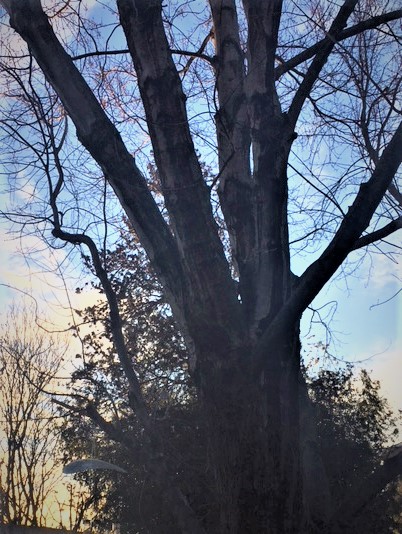
I am especially attuned to the large, red maple tree in my back garden which now stretches her sinuous limbs high above my three-story stucco twin home. When I moved to Phoenixville 17 years ago, her highest limbs barely reached the top of the first story. My daily morning ritual consists of brewing a pot of coffee, settling in at my kitchen table with a steaming cup of the black brew and gazing out the window at this tree’s growing and ever-changing form. Her current leafless state reveals long, dark branches stretching earnestly in all directions toward the sun that showers her generously from this southern exposure.

My neighbor, an avid bird watcher, has suspended a long cylindrical bird feeder on one of the branches which extends across the fence which runs along our property line. To deter the neighborhood squirrels from raiding this avian restaurant, Chuck has installed a large, floppy green disc about six inches about the feeder. Any squirrel attempting the reach it quickly discovers that using the disc as a stepping stone to the feeder will only lead to an unceremonious fall into the flower beds below. Nonetheless, this does not seem to deter the younger squirrels from investigating the feeder on a regular basis. The inevitable consternation proves to be a source of fascination for my fifteen-year-old cat Josephine who often perches in my kitchen window to watch the show.

This scene unfolds on a daily basis and provides amusement and reassurance in its constancy. I later climb the stairs to my second-floor office to embark on my work-related rituals: turning on my computer, composing my list of priorities for the day and reviewing my constituent cases. Before I read my emails, I often glance at the news headlines which inevitably report gloomy pandemic statistics, stormy political dynamics and the ravages of violent weather related to climate change somewhere in the world. I can feel the muscles in my lower back start to tense as I skim these grim snippets.

Particularly as a person who lives alone, I have felt emotionally vulnerable during the early months of the pandemic when we were advised to stay home to avoid the virus. Left alone with only my own thoughts and headlines like these, how could I possibly feel hopeful?

Ginger’s tree

It’s been a very long almost two years that we’ve endured the uncertainty of a world that constantly feels like it’s on the brink of impending disaster from a health emergency, changing climate and sometimes very cruel and violent behavior we observe in our fellow human beings. At this point, what wisdom would I give our younger generation?

Adopt a tree. Maybe it’s a big maple like mine in your own back yard. Maybe it’s a sapling you plant with other volunteers in your town park. Possibly your tree is a towering white oak like the one I visit on my hikes in a nearby nature preserve. Visit your tree on a regular basis. Notice how it grows, how its foliage changes with the seasons and how it weathers the storms. Like trees, we can’t choose the weather. We can only adapt and, as you watch your tree over time, you will notice it has mastered this lesson and has much to teach you.

About the author: Ginger Murphy is an ardent believer in the healing power of nature. A long-time resident of Phoenixville, Pennsylvania, she is also an avid hiker and photographer, spending many restorative hours walking  trails along the Schuylkill River and exploring parks across the region. English teacher, grant writer and nonprofit administrator are a few of the positions she has held in her professional life. Ginger completed her undergraduate work in English at Wesleyan University and holds a Masters degree in Education from the University of Pennsylvania. Her short story “A Daughter’s Dilemma” is featured in The Life Unexpected An Anthology of Stories and Poems from the Women’s Writing Circle.

Simplicity and the Creative Life

2022 is shaping up to be an eerie replay of 2021. Disruptions, cancellations and a feeling that things are on hold again pervade. When I go into the supermarket, black masks, the Darth Vader kind if you follow the advice and ditch the cloth mask for the N95, cover smiles.

Unfortunately, I felt I had no choice but to cancel our January read around of Women’s Writing Circle. After so long, we had finally broken the isolation—as one writer put it, “It’s almost a miracle” —meeting around a lighted candle in the library after more than a year. Although January is the month when the women are most invested and eager to make writing a daily routine, we again rely on our own fortitude and discipline, rather than community, to make that happen. My hope is that we return to the Circle by early spring. But for now …

Photo by Simon Berger on Pexels.com

Maybe, it’s time to simplify, to create, something psychologists agree is a way to reduce anxiety. As Franz Kafka said, “You do not need to leave your room. Remain sitting at your table and listen. Do not even listen, simply wait, be quite still and solitary. The world will freely offer itself to you to be unmasked, it has no choice, it will roll in ecstasy at your feet.”

Photo by Trang Pham on Pexels.com

Whether writing, listening to music, taking a walk, painting a watercolor, or simply imagining a new place, a new way of living, creativity reduces anxiety.

My friend said to me the other day when he called from the Midwest, “This is a dangerous country to live in. Too many people don’t care how their actions affect others.” There’s something to be said for sitting still, waiting this out, he said. We shared stories. A vaccinated friend who had tested positive, jumped on a plane anyway because testing isn’t required on domestic flights … and he had no patience to rent a car and drive the 800 miles home.

Margaret Atwood said, one word after another and another is POWER. A writer takes a real-life event and recreates through imagination a memory, a new take on a relationship, a moment of being that crystallizes into truth.

A story invokes another story and another, but patience is necessary. Brenda Ueland said, “If you write, good ideas must come welling up into you so that you have something to write. If good ideas do not come at once, or for a long time, do not be troubled at all. Wait for them. Put down the ideas no matter how insignificant they are. But do not feel, anymore, guilty about idleness and solitude.”

As a person who often bought into that worn mantra ‘Make each day count’, whether through writing, completing a home improvement project, going to work, raising children, I find pleasure in a drive past fields reflecting winter’s luminous turquoise and gold palette. Although I’ve made the same drive hundreds of times, I move a little slower now, take more notice. At the gym last week, a woman felt I wasn’t moving quickly enough as we put away our weights. “Move it, Susan,” she said.  Over the last two years I’ve learned the value of slowing down. I said this to her. She shrugged and rolled her eyes. Everyone moves at their own pace. For me, a page well crafted, a flock of geese, a conversation with a friend, a workout at the gym is enough. I feel the anxiety fall away. What could be simpler than that?

A Writer Thinks ‘It’s a Wonderful Life’

Recently, I visited my local bookshop and picked up a copy of Mary Oliver’s Devotions, a compilation of her best poetry spanning fifty years. A morning at the beach, a sparrow singing on a tree branch, her poems brim with the lyricism of everyday living. Considering we’re in Advent, one poem particularly captivated me.

The Poet Thinks About the Donkey

On the outskirts of Jerusalem
the donkey waited.
Not especially brave, or filled with understanding,
he stood and waited.

How horses, turned out into the meadow,
leap with delight!
How doves, released from their cages,
clatter away, splashed with sunlight.

But the donkey, tied to a tree as usual, waited.
Then he let himself be led away.
Then he let the stranger mount.

Never had he seen such crowds!
And I wonder if he at all imagined what was to happen.
Still, he was what he had always been: small, dark, obedient.

I hope, finally, he felt brave.
I hope, finally, he loved the man who rode so lightly upon him,
as he lifted one dusty hoof and stepped, as he had to, forward.

***

I like to think that no matter how small or unimportant we may feel in the scheme of things, Oliver’s poem is a reminder that each of us carries the other on his back. Which brings me to the Frank Capra Christmas classic It’s a Wonderful Life. Just last week my son’s new neighbor moved into the apartment below him. An 87-year-old former Marine, the man had lost his wife to Covid in March. Now he lives alone. His daughter warned my son that “he likes to turn up the volume on the TV.” A few nights ago, as he pulled up in his car, Daniel heard the man’s TV blaring as far as the parking lot. He knocked on the door to ask him to lower it and a few moments later, the man opened the door and invited him in. He was watching It’s a Wonderful Life. I often tried to get my sons to watch that movie as a family, but maybe because there were so many new films that came out during the Christmas holidays when they were growing up, we never did sit down together. Now, with his new neighbor, Daniel watched Jimmy Stewart and Donna Reed live the quintessential moments of loss, love and the power of community.

Last night, I tuned in on the movie, which is streaming on Amazon. While the story is a bit old-fashioned, the message that life doesn’t always turn out the way we hoped or expected resonates. But as Stewart’s character George Bailey, a man on the verge of suicide learns, our blessings, if we look, are many. Bailey “didn’t understand” until the end that his humble life changed the lives of countless others.

A dark December night and an unexpected invitation from a neighbor … it can be a wonderful life. Like Oliver’s little donkey, we lift one “dusty hoof” and move forward, carrying that stranger on our back, hopefully, with love.

This post also appeared in The Writer’s Corner at: http://www.stmarkshb.org

The Magic of Collaboration

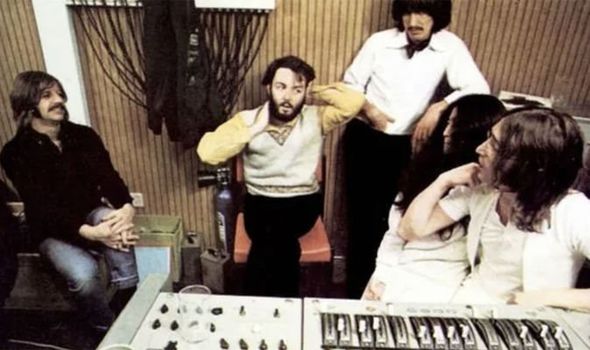
I didn’t plan to watch Peter Jackson’s documentary The Beatles: Get Back but I couldn’t resist. Disney Plus offered a week of free viewing and as one who grew up with the Beatles, I put aside my feeling that we shouldn’t reanalyze magic.

Cobbled out of old footage moldering on steel reels in the basement of Twickenham Studios, the star of Get Back is collaboration of the creative spirit. Four became as one, but only after hard work, sweat, a whole lot of smoking and drinking and Harrison walking out at one point and saying he quit. After conversations, stroking ruffled egos, more smoking and drinking, the music emerged from the rooftop. In January, 1969, twenty-one days of studio sessions culminated in the final live performance of the Beatles on the rooftop of Apple Headquarters on Savile Row. The interplay between Lennon and McCartney and their familiarity with the other’s creative process, along with their deep respect for each other moved me. While each had diverged into distinct styles by then, they appreciated the other, Lennon nodding to McCartney’s “The Long and Winding Road” and McCartney tapping his foot to Lennon’s “Dig a Pony” as they worked on the Let It Be album. While George Harrison kept trying to stake his claim to artistic recognition with his own songwriting, he found himself drowned out by the unique Lennon and McCartney team, although his guitar riffs in “Get Back” and “Don’t Let Me Down” have become iconic. At one session we hear him in the background strumming the chords of a new melody he’s playing around with; that song became “Something. “

To hear a song like “Get Back” emerge, one painstaking chord and lyric at a time, offered a new appreciation for my idols. I often thought the music flowed from the Beatles like honey from a tree. Instead, the documentary shed light on the grueling work of creating art. It’s often been said that McCartney must dream songs and lyrics in his sleep because he’s so prolific, but even he didn’t have the words “JoJo left his home in Tucson Arizona” for the first of many, many tries. Reflection, trial and error, playing around with nonsense words and chords, there’s a lesson there to let the work guide you.

I thought about my own work and the collaboration I’ve experienced with other writers. I always felt each of us brought our own voice to a project—thinking about our anthologies Slants of Light and The Life Unexpected. The end result was only as good as the respect and give and take that went into it, and the changes one writer proposed to a story that another writer might not have thought, even though it was her work.

Since we restarted the Women’s Writing Circle, I’ve experienced the collaborative spirit of goodwill. Last meeting, I read a piece and a writer said to me, how about putting this sentence at the beginning of the description, instead of the end? She was right. It made a better flow. Collaborative author teams abound from writers and ghostwriters to screen writers and comedy teams. I hired two developmental editors and asked a friend to beta read my current manuscript. Collaboration amounts to more than polishing and revision; it’s the fuel to keep going, the pat on the back, the words, ‘job well done’, or have you thought of trying this? Every time I think I know what I’m doing, collaboration shows a better way. A beat with no melody, a melody with no beat. You can’t do it alone. That’s the lesson of The Beatles: Get Back.