The Artist’s Date Awaits

It was the last day of July. After a scorching month, the heat and humidity vanished. It was one of those days that the poet, Billy Collins, describes as “a day of all lawn and sky…a day that gives you no choice, but to sit outside in a rough wooden chair,” or, in my case, get out of the house and take myself on an artist’s date. Coined by writer Julia Cameron, an artist’s date is a solo expedition to nurture and spark creativity. The date is with you, the artist, but I like to think of it as a date with other artists too.

Summer is ending, and the “heads of the roses begin to droop” as Collins said. Watercolor sunsets paint the sky, a harbinger of fall. What had I accomplished this summer? What writing of worth?
If each day is the same as the last, that’s no way to live unless you find the blessing in each day.

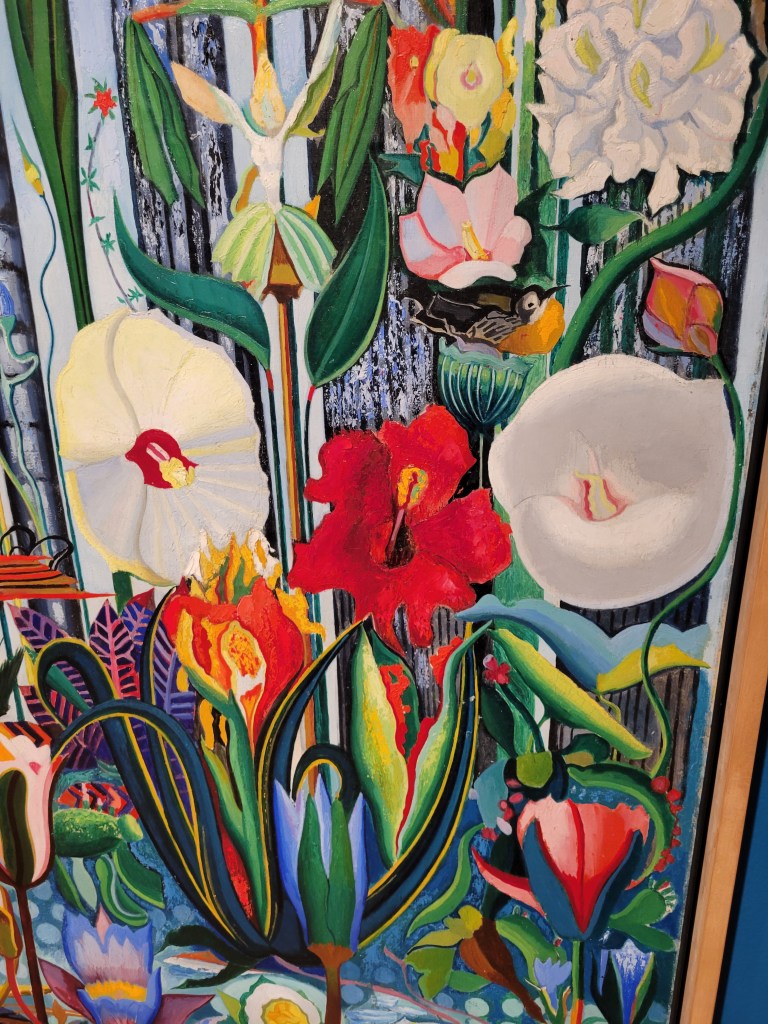
I drove the verdant Brandywine Valley to a museum tucked behind tall purple phlox and creamy Queen Anne’s Lace along a river of dreams that inspired the great Andrew Wyeth. The museum featured an exhibit by an Italian artist I had never heard of. Nature inspired much of Joseph Stella’s work, as well as a longing for a fleeting Italy he once knew, and his birthplace by the bay. A riot of flowers and Madonna paintings, of swans and squashes, of lotuses and gardenia, of Mount Vesuvius and the Isle of Capri graced the gallery.
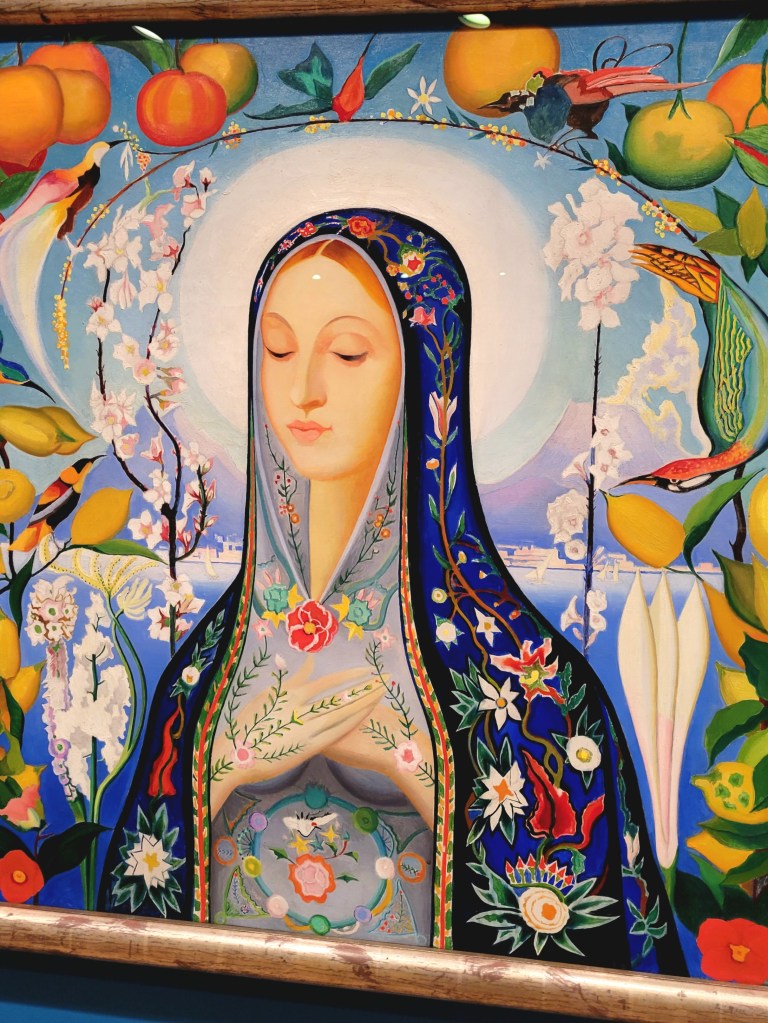
This bounty of paintings, a symbol of a prolific artist who cultivated his artistry until he died got me thinking. When was the last time I wrote? A week ago? Two weeks ago? Although my ideas, as Ray Bradbury said, “wake me like an alarm clock,” they don’t always reach paper. I put the dark thoughts aside, the buzz of talk radio portending demise, and say, “Who wants to read that?” So I lounge on the sofa and pick up a novel. Have you read the work of Dennis Lehane? I’m reading his latest Small Mercies. His fiction is a getaway and entertaining instruction about the human condition, and its psyche. The man is a marvel of a writer.

Today, I sit at my big black desk. The hum of the highway down the hill is dulled by the birds outside my open window (no air conditioning today). The talk radio is off. I’m writing thanks to Stella, to Lehane, and to Wyeth, and Cameron. An artist awaits. I’m ready for my next date here along the writer’s way. How about you?
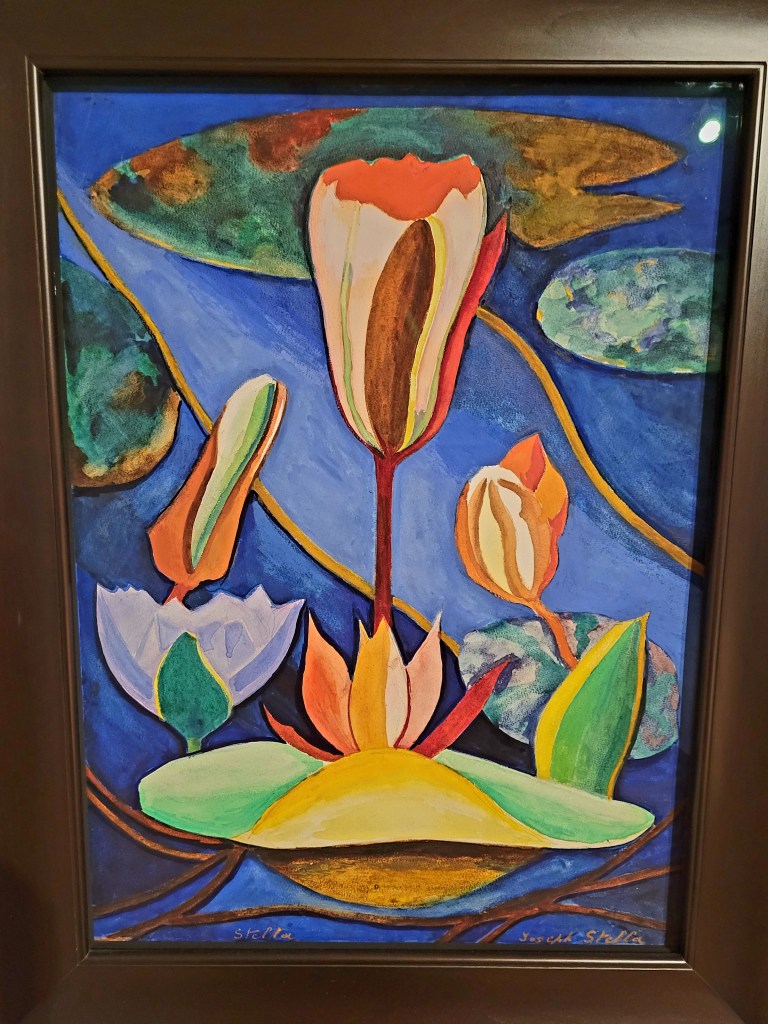
Paintings by Joseph Stella exhibited at Brandywine Museum of Art. Photos by Susan Weidener.

Jersey Shore Memories


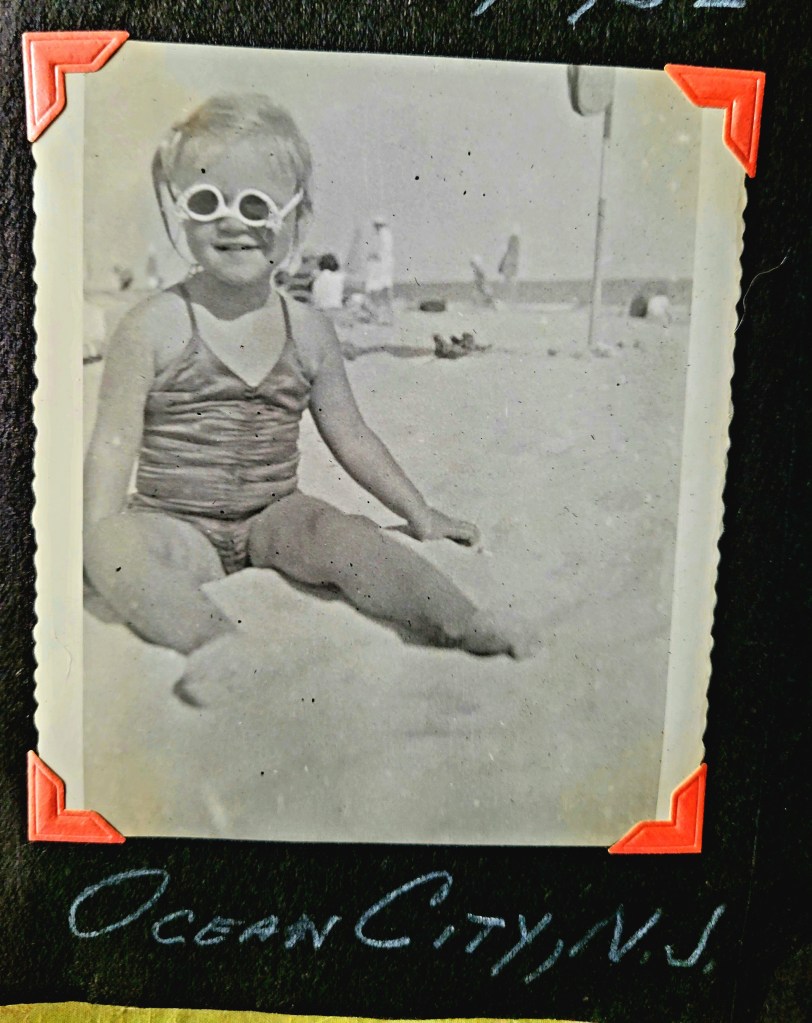
Ocean City is one of those places for me that if you begin to tally up the memories, you give up. They surface with the first whiff of salt water as you cross the bay bridge.

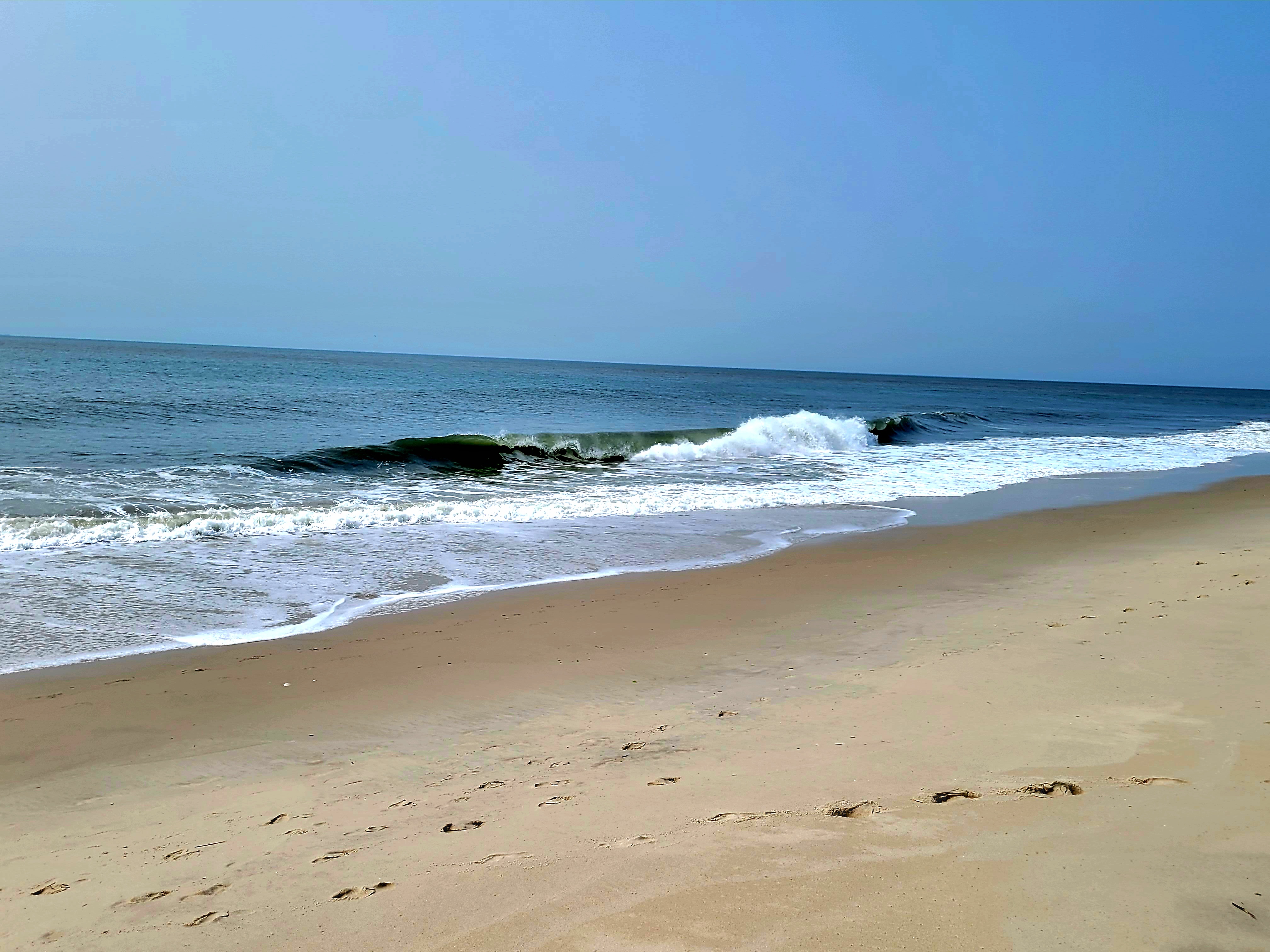
I drove to the Jersey Shore with two friends from exercise class last week. This is the second year we’ve gone to the shore to celebrate my birthday and get away for the day, the fledgling tradition we hope to repeat next summer. Last year it was Asbury Park.

My family used to rent a house every July or August in Ocean City when I was a kid. Dad stopped at Somers Point first to pick up his booze and beer. Ocean City is dry. The Methodists founded the place as a Christian retreat back in the 1800s.


I see Mother coming home from the beach, and that night turning red as the proverbial lobster from a nasty sunburn. My brother, Andy, who was seven years older than me, sat on the front porch of the rental house and smoked cigarettes, and our cocker spaniel, Lucky, sat at our feet. I adored my older brother and played endless games of Blackjack with him, not because I loved cards but because he did. When I was three, I was stung by a jellyfish. I don’t remember it, but Dad said he sucked the poison out of my toes.


My parents spent their honeymoon in Ocean City in 1940 at the Flanders Hotel. The hotel is the signature building with its coral-tiled roof rising on the horizon when you cross the bay bridge. The Flanders is also where John and I spent our first honeymoon. Our first because we had to get married on the sly before the actual ceremony in June since his mother was threatening to kill both of us in her jealous rage, and the minister at my church suggested a marriage certificate would end that once and for all as she would see the futility of trying to rail against a done deal. Our room at the Flanders had a big double bed and a TV tuned to the 76ers playing in the NBA finals that year. Away from the madness with the curtains billowing from ocean breezes the world was ours for taking.


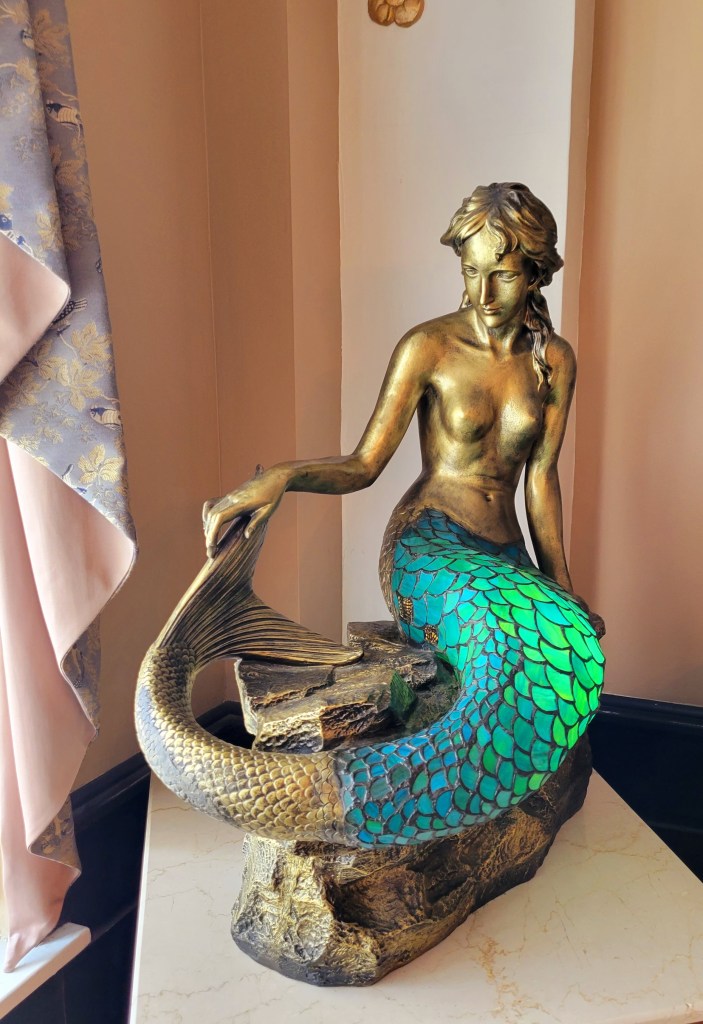
“Whoever said aging is a joy is …” I shook my head and didn’t finish my thought as my friends and I entered the Flanders lobby and took in the framed photographs of Ocean City back in the day. Women and men in bathing suits that covered half their bodies and a mermaid sculpture over by the window were so lovely and ephemeral. My friend nodded. “Yeah, it’s BS,” she said, referring to my comment about aging being a joy. “Thanks,” I said with a grateful grin. It’s seen as uncivil, even ungracious, to say you don’t like growing old, especially in a room full of old people. I wanted to hug her for the affirmation. Anyway, the upside is you learn to appreciate the little things, the small moments of pleasure, the more you’ve endured.


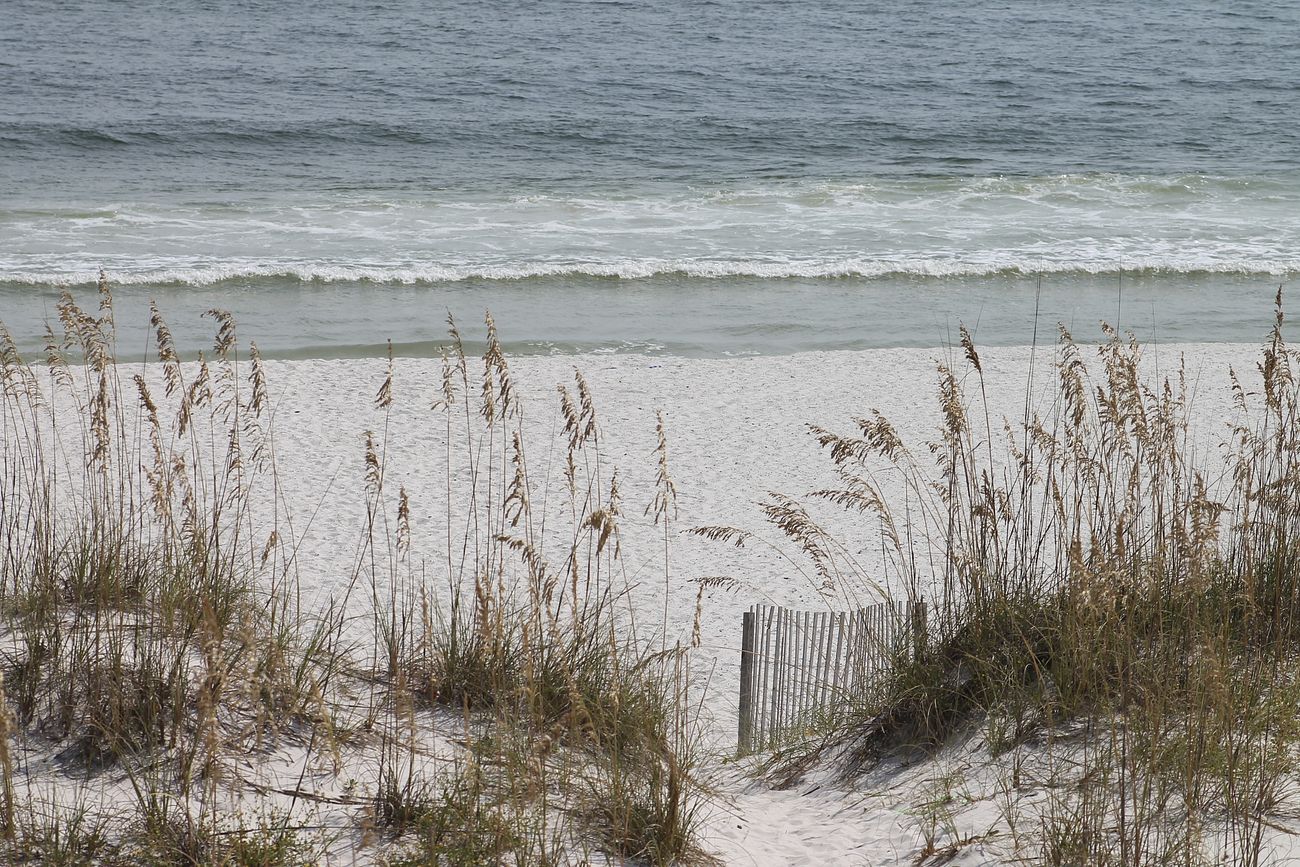
A few summers after our honeymoon at the Flanders and before the kids were born, John and I would drive to Ocean City just for the day, out to the end of the island where there are showers and changing stations. “See that’s where we were,” I said, pointing to the brown doors where you change. Parachute-shaped kites rode high above the dunes. The humidity hung like a heavy wet curtain and no one wanted to take my sad and romantic trip down memory lane by getting out of the car and heading to the beach.


He’s been gone so long, almost thirty years now. I remember those trips, that sunburn on his chest that I tenderly touched with my fingertips, my streaked blond hair turned naturally by sun and saltwater. “It’s hard not having a husband,” I said. “You two are so lucky. I’d get depressed if I thought about it too much so I stay in the moment, don’t look too far ahead, and be grateful for what I have.” A companionable silence followed in the car. I mean what do you say to that? Husband or not, I think we all feel that way, that is if we’re smart. Still, thank god for good friends so you can confide.

They’re all gone now…my parents, my brother, my husband, but nothing changes with time. Not really. They’re still with me, still here in what I write.

“Where to now?” We ended up at a diner about an hour out of Ocean City one of those red, black, and silver things straight out of American Graffiti with pot pies and cookies the size of plates sold by the register. As we drove home, a brilliant sunset of rose and peach streaked the sky to end the day. Next birthday another shore town to explore with good friends. That’s good enough now.

How about you? Do you have a place filled with memories?
This Place Called Home

Last week, I drove back to the old neighborhood where I grew up, where my parents lived across the street from a military academy, where I met my future husband. In the place of a once stately house where the head of the school lived, a skeletal structure under construction with a three-car garage jutted up from the ground. The towering oak that used to be there was gone, too, sacrificed, no doubt to the fledgling McMansion. Across the street at the chapel, my parents are buried, an American flag commemorating my father as an honorary Brigadier General in the Pennsylvania National Guard.

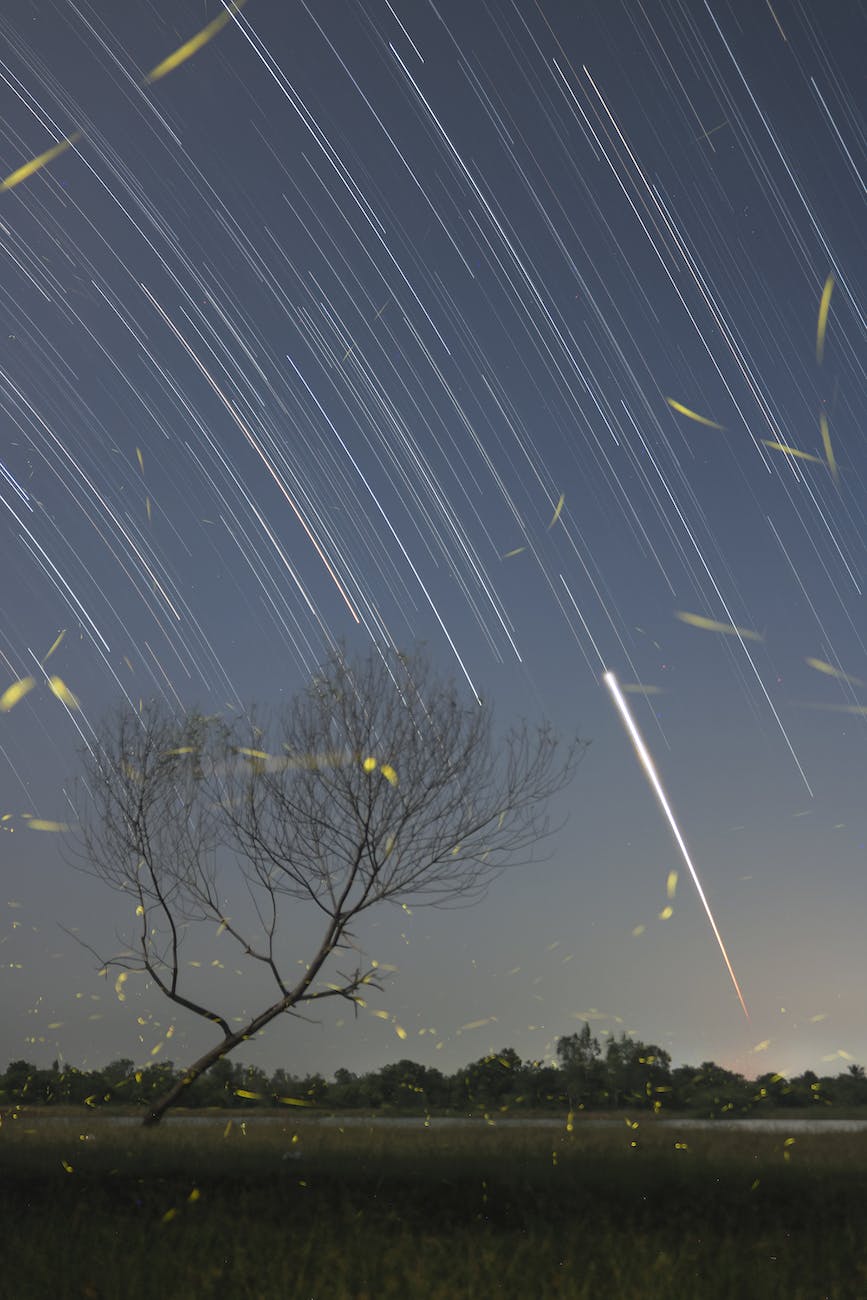
Under that tree more years ago than I care to remember, John and I sat in a field lit up with fireflies. We talked about marriage. Like most young couples, we weren’t sure about ourselves or this commitment. We had to get through the impetuous outbursts, and the naive lust of youth, but like those fireflies our lights attracted and chemistry prevailed. I remember the sweetness of the moment more than any words that sultry summer night. I didn’t need to know what would come, nor would I have wanted to, if I could, nor would he, although he was the strongest, most courageous person I’ve ever known.

Photo by Dinesh Kumar on Pexels.com

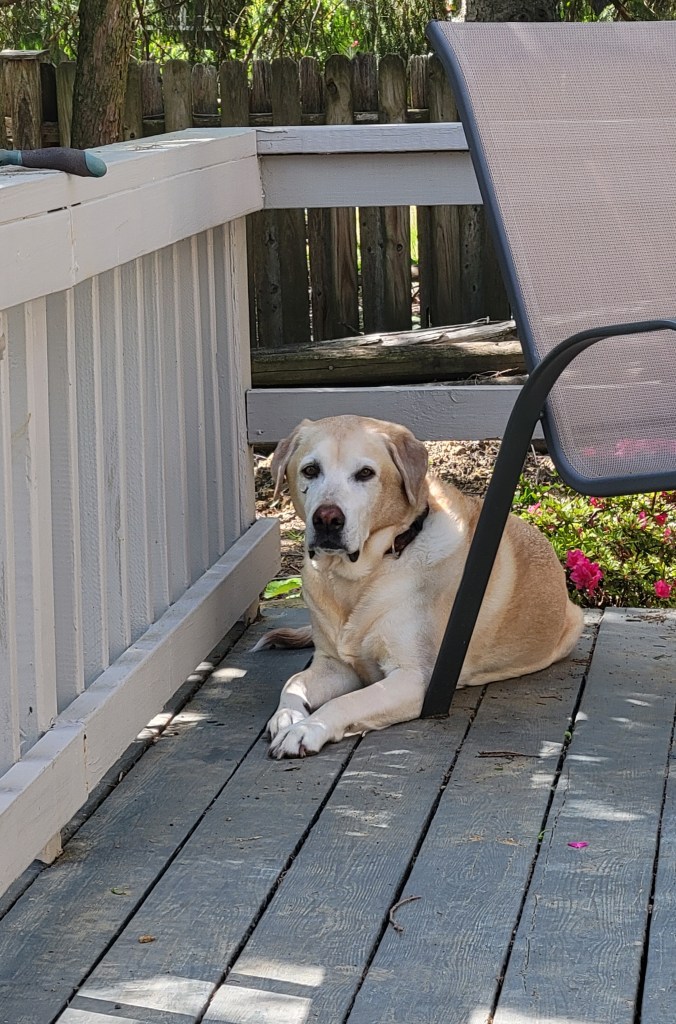
The heat these last few days has been intense. We take in each summer day with little energy Lily and I. She doesn’t want to eat. After adding canned rice and chicken to her kibble, she ate again, but her age reminds me we don’t have much longer. Labs can live to be thirteen or fourteen, and she’s going into her eleventh year.

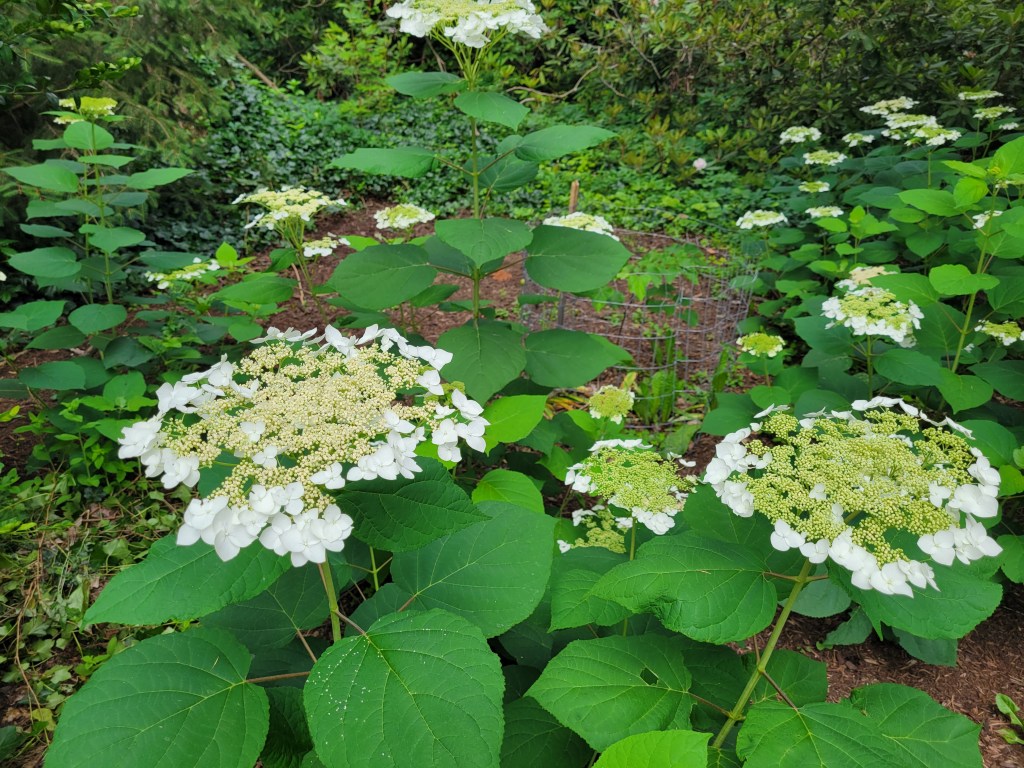
I’ve lived at the same address for thirty-five years, raised my sons here, and had four dogs who played in the backyard. One is buried near the hydrangea by the shed.

I could always say my home was a green part of the world where horses grazed, where farmhouses and silos caught the afternoon light and shadows. It was a good place to raise two boys on my own. Yet, with each passing year, the traffic encroached on the fields and farms with more ferocity, and after storms, the water from rainstorms rushed down creeks and streams from parking lots and widened highways. The remnants of Revolutionary War sites vied with a crush of new hotels and apartment buildings, each one looking just like the other. The family-owned pizza parlor closed.

This July, a family of deer stands sentinel among tall grasses near a parked backhoe. A two-million-square-foot warehouse is slated to replace a working farm, and bulldozers and tractor-trailers will follow something I wrote about. It’s a sad irony, if it is Amazon, as some suspect. My books, my salvation these years, are available through purchase on Amazon. Since they often don’t stock self-published authors’ books in bookstores and libraries, what choice did I have? So, I remain a small cog in the online shopping wheel in a country obsessed with buying “stuff” stocked in monstrous warehouses.

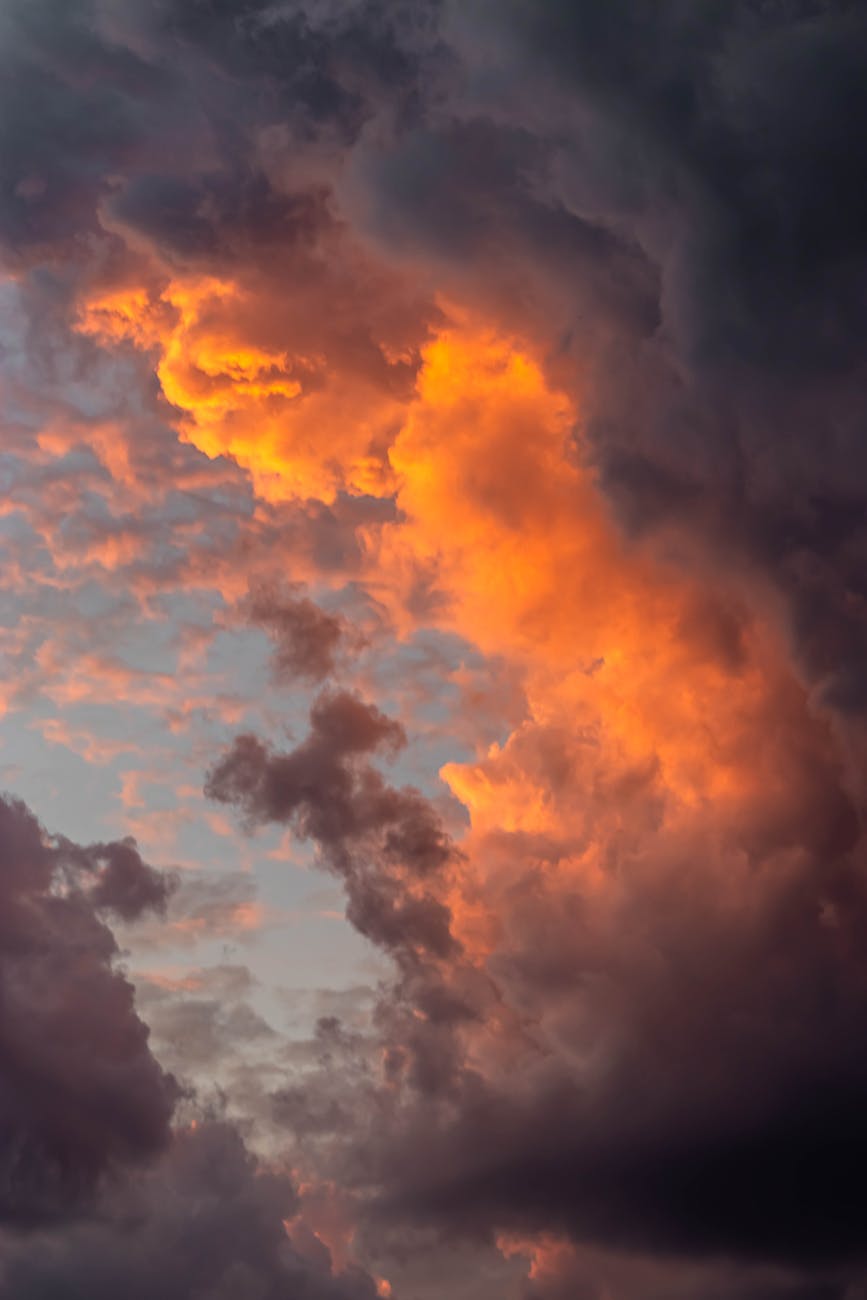
Yet despite obstacles and challenges over the years, my little garden grows, the birds wake me every morning with a sweet chirp of hope, and at sunset, the sky blooms with patches of peach and rose. There’s nowhere I have to be unless I want to go.

Would I advocate stopping the madness, writing letters, attending meetings, and preserving the land as open space if it weren’t for the birds? If it weren’t for the sunsets of God’s hand that paint the sky year after year? And the memory of one man who said he loved me?

Photo by paul voie on Pexels.com

As time marches on, so does the awareness if we’re lucky to remember the precious moments. We remember the ones who mattered. We realize what we value. We jettison the “stuff” and enjoy if we can this place called home.

The Lesson of Juneteenth

After a long day on Friday, seeing no one and still dealing with the lingering effects of Covid compliments of my recent international trip, I began feeling sorry for myself. The next day would have been my 40-something wedding anniversary and after that was Father’s Day. My sons had been without their father for decades.


How could it be that I had come to this place, living alone, with nowhere to go, and feeling tired and worn out? As usual, when feeling down, I turn to books. I began reading the short and transcendent essays in Letter to My Daughter by Maya Angelou. In one essay, she wrote that after considering suicide, a friend advised her to write. “When I reached the last line on the first page of the yellow pad, the agent of madness was routed.”


I could identify, not with wanting to commit suicide, which I never have, but how writing lifts the spirit. “When I decide to write anything,” Angelou went on, “I get caught up in my insecurity despite the prior accolades. I think, uh, uh, now they will know I am a charlatan and that I really cannot write and write really well. I am almost undone, then I pull out a new yellow pad and as I approach the clean page, I think of how blessed I am.”


I knew the insecurity and also how blessed I am that I have the privilege of being a writer with a life that never would have been had I not been an educated woman with a roof over my head.


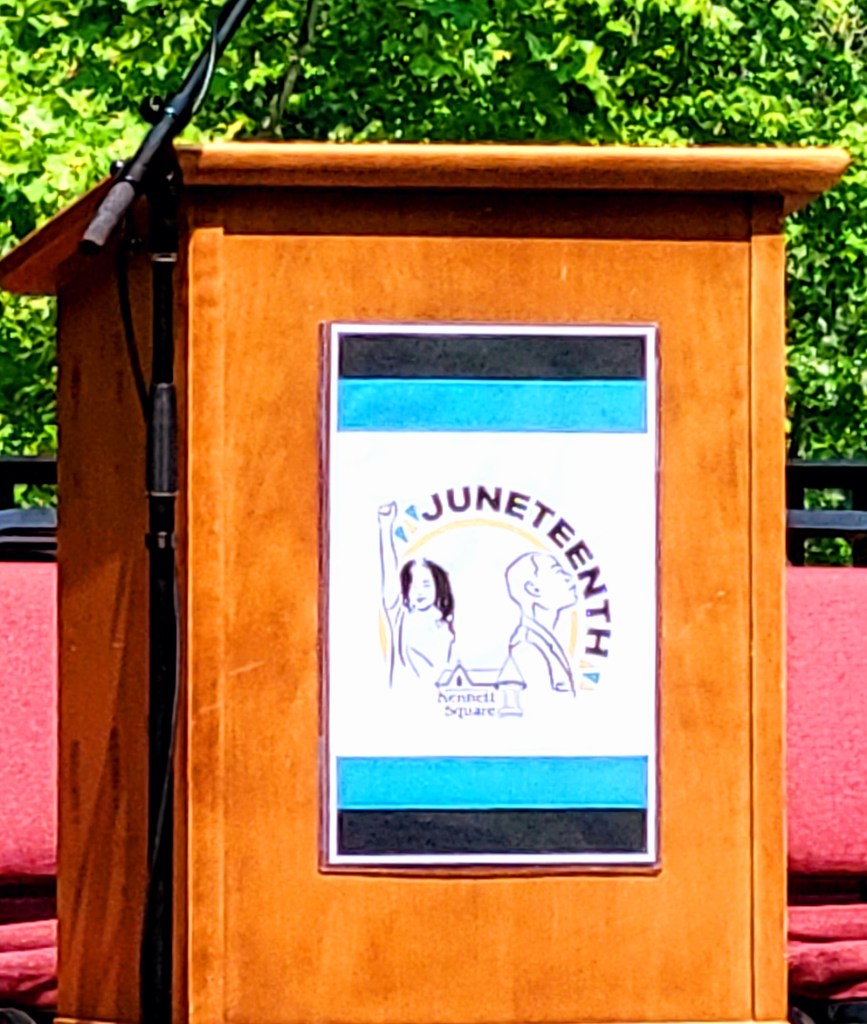
The next morning, as I skimmed weekend happenings in my community, I found a listing of Juneteenth events. Other than knowing Juneteenth was made a national holiday to commemorate that it was two years after the Emancipation Proclamation was issued that enslaved people in Texas learned on June 19, 1865, they were no longer enslaved, I didn’t “get” Juneteenth. One event caught my eye. A poetry slam.


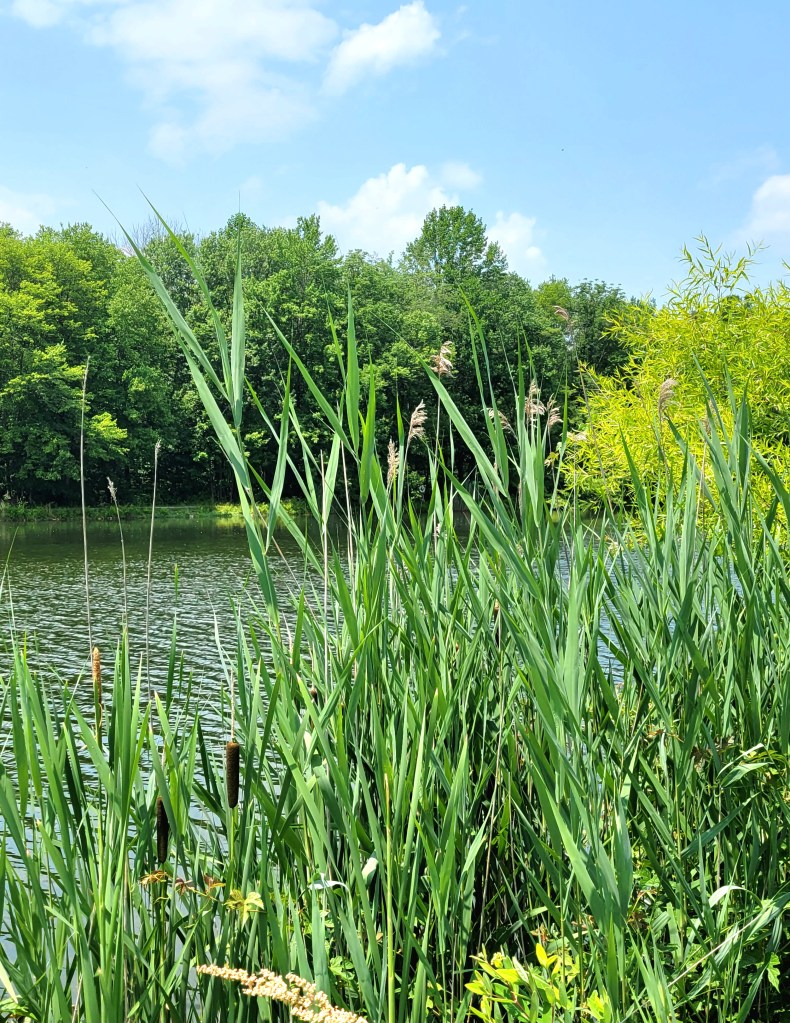
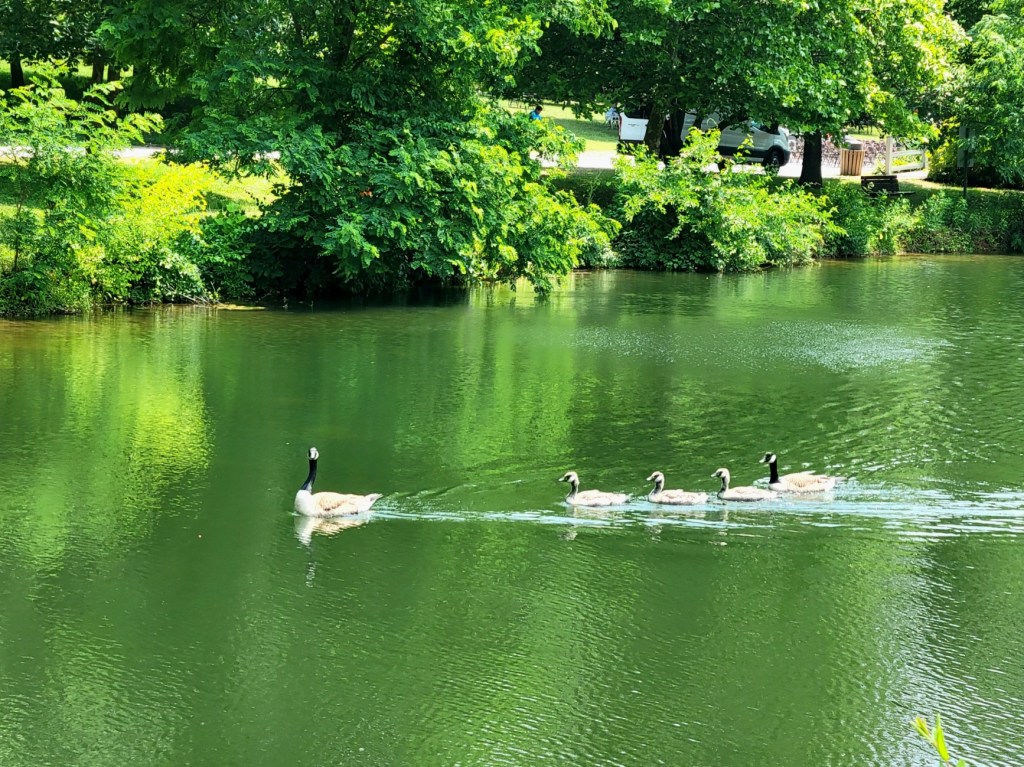
I got in the car and drove thirty minutes to a park where the poetry slam was held in a bandstand backing up to a lake encircled by green and gold marsh grasses. A family of ducks lazily swam by the water’s edge. Poets and pastors mingled in the warm June air as the smell of barbecue from the smoker brought back memories of cookouts in the park when I was a Girl Scout. Not far from the Mason-Dixon Line, the area played an integral role in the Underground Railroad. A building in the nearby town features a Harriet Tubman mural.

Photos by Susan Weidener


I’ve spent much of my life in the company of other writers, not only writing with them but listening to their work and reading their books and articles. But sometimes, you forget, get lazy, and need a little jumpstart to remember just how marvelous it is when the voice is strong and the message passionate.


The Juneteenth poems rang with vulnerability and struggle…one man recited by heart a long poem he had written—his story after being incarcerated for twenty years. As a teenager, he had seen drugs on the streets, and he sold drugs. He saw liquor stores built in his community, the poverty and the anguish in a cruel generational cycle. But he had survived on Juneteenth to tell his story. A thirteen-year-old girl read a poem she had dedicated to Breonna Taylor. “Just say her name,” she said. “Say her name.”

Another young poet celebrated her hair, her body, and her race.

Emotions, passion, honesty, and vulnerability make for compelling writing and storytelling. Creative work isn’t just about yourself, but about the rap, the voice, the highs and lows of a life worth living.

Somewhere along the way as a white Protestant girl, penning her memories and her life story, I may have withheld some of my deepest feelings. I had grown up in a house where silence, rather than emotions, reigned sacrosanctly.  I think, uh, uh, now they will know I am a charlatan and that I really cannot write and write really well.

It’s up to me to shed weariness and stay engaged in a country that needs voices of gratitude and faith that this can be a better place to live. Pessimism will come again, and when it does, I’ll pick up that book or pick up that pen and pad…or head out to hear my fellow writers entertain and teach and bare their souls. Juneteenth was a lesson and an incentive to infuse more of that in my work.


Writing Life with Possibility

Thirteen years ago, I began thinking I should write my memoirs. I had a vague notion I would pen something entertaining, a page-turner that might resonate with women widowed at a young age who resorted to online dating. I needed a creative outlet for my writing skills after my career as a reporter ended, rather abruptly, but not unexpectedly.

Of course, what I really wanted to write about was John. I learned that writing Again In a Heartbeat: A Memoir of Love, Loss, and Dating Again and its sequel Morning at Wellington Square offered a way to heal, a way to look at what was cracked and broken in my life, as well as what brought joy and fulfillment. I turned to fiction with A Portrait of Love and Honor and its sequel And the Memory Returns. I kept returning to the same themes of love and loss, honor and dishonor, and a woman’s journey.

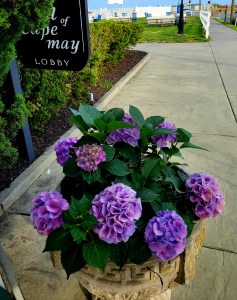
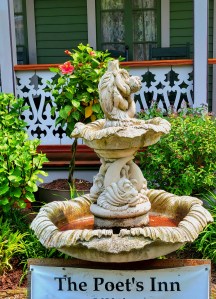
What more is there to say? Why keep writing? Now I write about traveling alone to Cape May, New Jersey, this “old school” town frozen in the beauty of a 19th-century poem. Ghosts of lovers and old people and of dogs who crossed that rainbow bridge stroll the sidewalks. Hydrangeas and roses bloom in profusion against porticos and verandas.  I don’t want to make conversation, smile and be available to another person because I like to think about what I’m going to write and let it sink into my thoughts. I take in the sky and the clouds above me, the cool blue sea and waves swirling toward the beach with its fragrance of salt water.

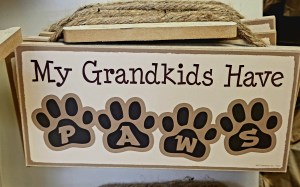
For breakfast, I sit under an outdoor umbrella. I order pancakes drowned in raspberries, strawberries, and blueberries. The butter is delicious and so is the maple syrup and freshly squeezed orange juice. I’m the only person eating alone. There’s a man who sits by himself with his Shih Tzu on a leash, but soon a woman joins him. After breakfast, I stroll through the shops. A sign captures my attention. My Grandkids Have Paws…funny and too true.

The writing life is alive with possibility, discovery, and reflection on a new morning.

When I return from the beach, I’m greeted with a surprise—a nest in the magnolia tree outside my kitchen window. A cardinal shrieks, scaring off a squirrel. His bright red plumage streaks across an azure sky. I look up at the nest and see the female cardinal, wings aflutter. Life will go on. The birds don’t worry. Why should I? For today, I’ll keep writing. Everything is so alive.

The Motherhood Contract

For years I swore I had no interest in becoming a mother. I guess I heard the biological clock ticking because I got pregnant at thirty-three, drowning out years of declaring that I would travel, write the Great American Novel, and never, ever, be tied down to changing diapers. Then, one day, I turned to my husband. “I want to have a baby. Is that alright with you?”

Photo by Susan Weidener

We had been married five years … five years of luxuriating in lazy Sunday mornings after making love and working The New York Times crossword in bed … five years of traveling to Yosemite and the seaside cliffs of Big Sur … five years of dawdling over candlelight dinners. But, I suppose five years wasn’t that long when you consider that we met and married within a year of meeting.

 “So, do you want to have a baby?”

John looked at me. “I’m happy just being with you, but if you want a baby, sure, let’s do it.”

And, just like that, I became a mother. Not once, but twice over the next four years, the first time the same age my mother was when she had me. It beat turning twenty-one and becoming “legal” … it beat walking down the aisle and saying “in sickness and in health” … it beat turning sixty and trying to convince myself it’s the new “middle age.” Talk about a milestone.

Motherhood, a friend once said to me, is “a contract in perpetuity.” It doesn’t end one day when your son or daughter turns eighteen and walks out the front door to attend college. It doesn’t end when they turn twenty-two and start their careers. It doesn’t end when they bring home crises and you feel useless, knowing this is a journey they need to travel on their own.

Which brings me to my mother. There was much about HER contract with motherhood that took me years to appreciate, and sadly, only after her death. She rarely offered advice and when she did it was “try marriage at least once” and “shave your legs on your wedding night” … but she packed school lunches day in and day out for me and my brother. She planted zinnias and cooked a mean rhubarb stew. She drank cocktails as she saw her possibilities dwindle — this after working as a babysitter, then as a clerk in the local gift shop, and, finally, at the John Wanamaker store selling women’s coats. In her fifties and without a college degree and no work experience (other than housewife and mother), this was all she could get … the price she paid to fulfill her “contract.”

Those lessons — her lessons — served me well as I focused on reading and educating myself as a way to escape a similar fate.

Yet, what mother hasn’t put her ambitions on hold? What mother hasn’t left the office early to pick a child up from soccer practice, attend a parent-teacher conference, or rush home to make that school play? Being a single mother made it that much harder. I wanted to be a good mother. We carved pumpkins at Halloween and dyed eggs at Easter, I took them to see Phantom of the Opera and Les Miserables at the Academy of Music. I was never going to be that star reporter at The Washington Post or write the Great American Novel, anyway. Motherhood was harder. It meant time to grow up. It meant teaching trust, integrity, loyalty, and faithfulness and trying your best to model that behavior. It meant discipline, teaching that actions have consequences, and taking away privileges. Learning and teaching life skills, wrapped up in the wisdom of the ages, by the proverbial seat of your pants. The lessons we teach should require a doctorate in philosophy and psychology, but we do the best we can.

As I look back on it, who would have imagined that when I first held those squirming little bodies, powdered those bottoms, and changed those diapers, my sons — and I — would travel the world together?

But we did. Travel that exceeded my wildest expectations. Brazil, China, Hong Kong, Australia, New Zealand, France, England, Spain, Italy, Czech Republic, Russia, Nepal, Egpyt, and Morocco.

When I introduce myself to people, I talk about my writing, but I also talk about the bigger part of my life. My sons. Writing the Great American Novel or the Great American Memoir could hardly have been as challenging or rewarding as this. So, what if I sound just like a million other proud moms? This is who I am. A mom who holds close to her heart that “contract in perpetuity” she made so long ago.

Happy Mother’s Day to all the courageous women who made and honored that “contract” to do the best they could for their children. Do you have a memory of being a mother or of your mother you would like to share?

Takeaways From Nature and Writing

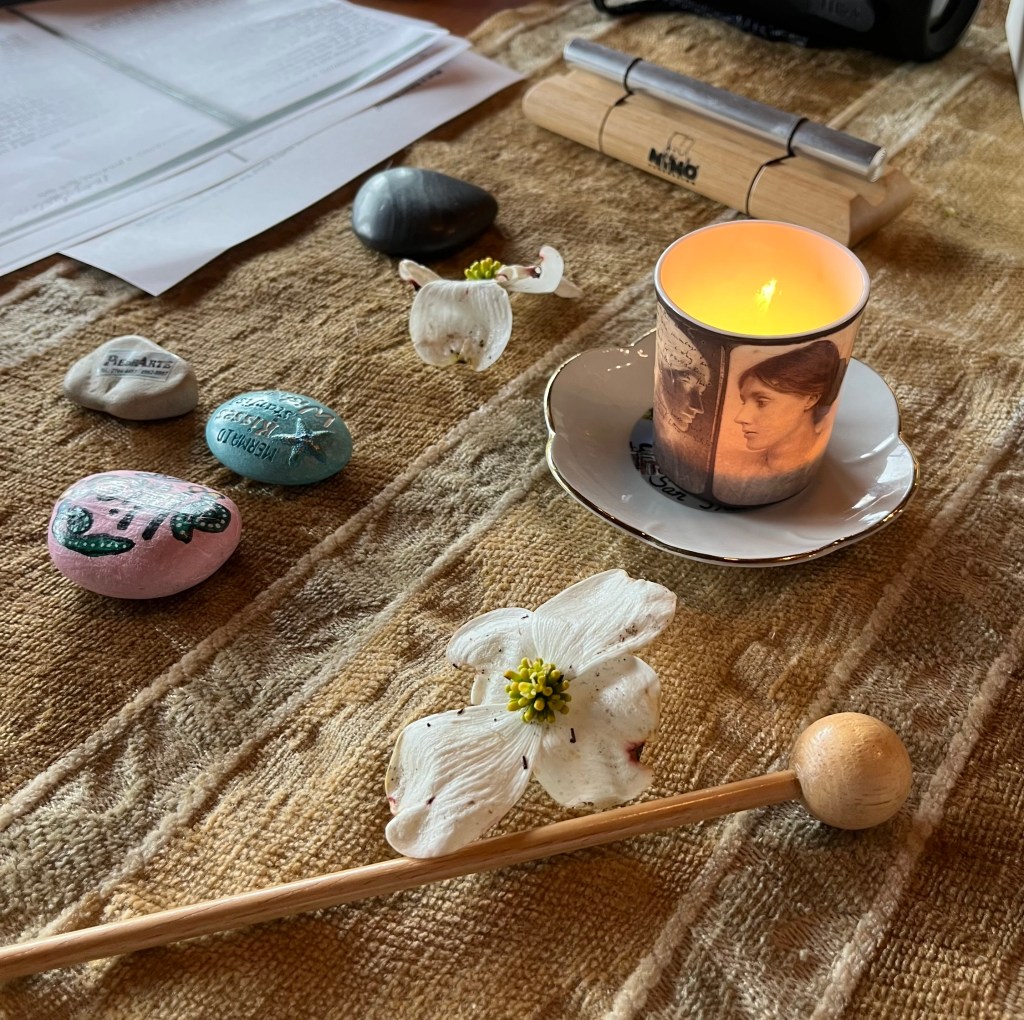
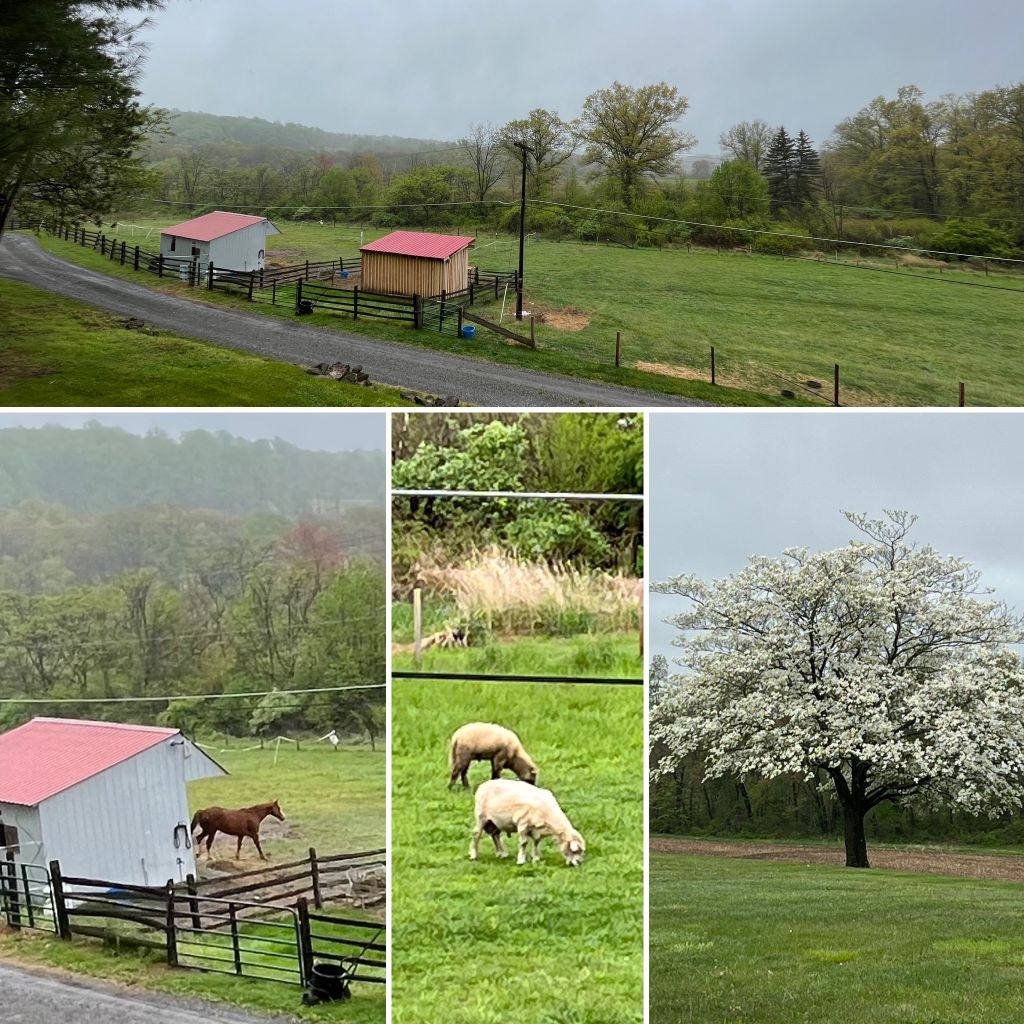
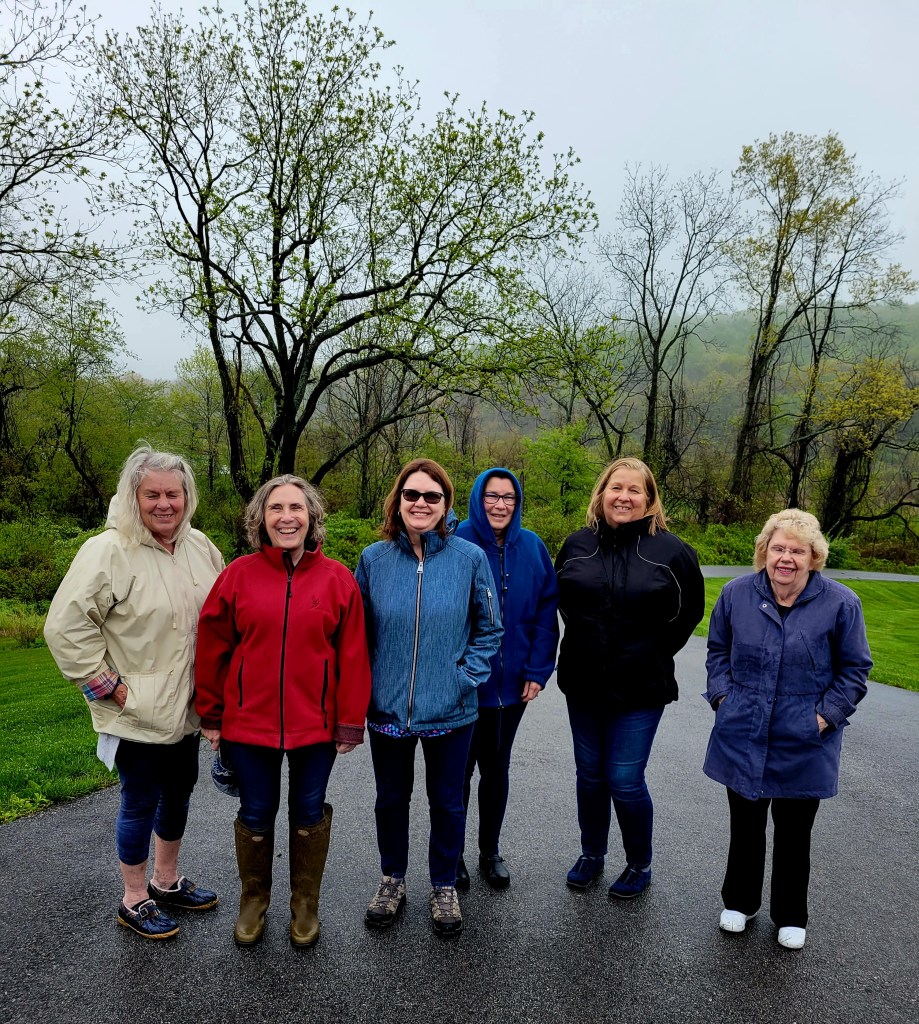
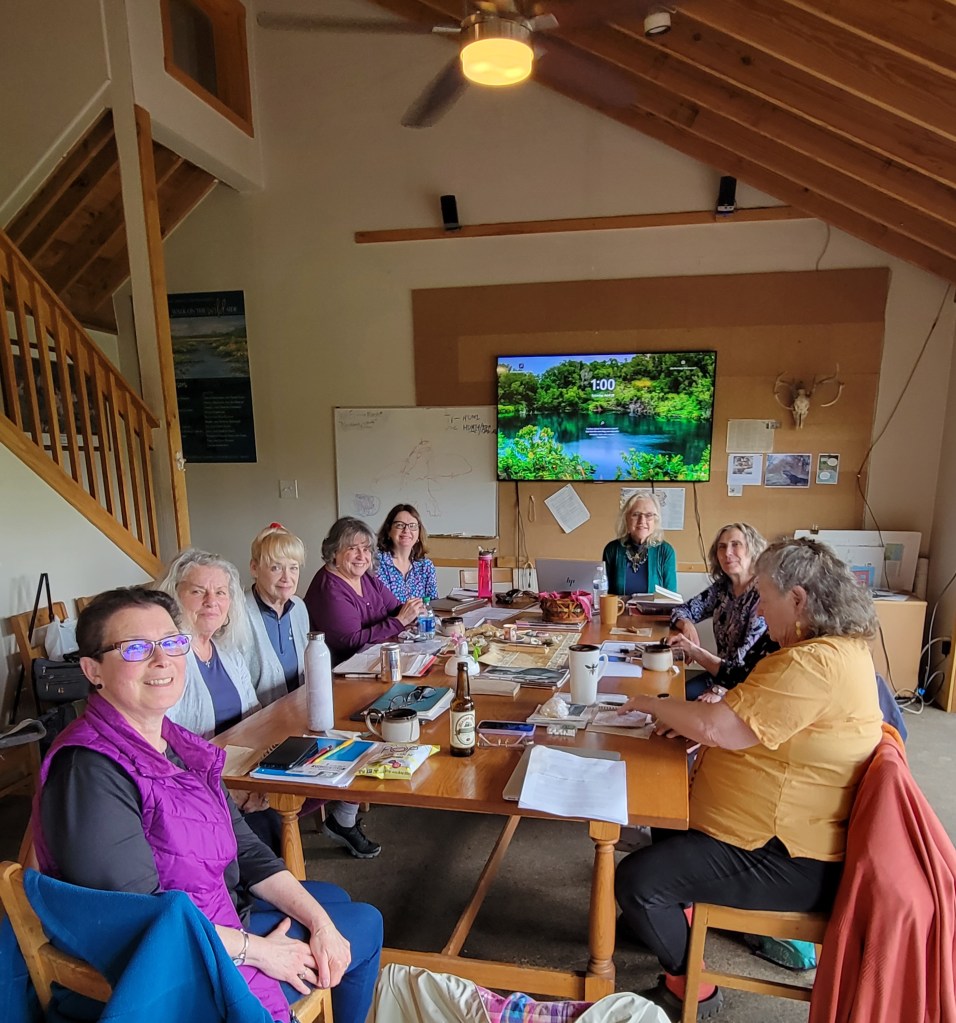
A green and gray gauze drapes the hillside of our retreat grounds in a cool April mist. Horses and lambs graze on a meadow not far from where white dogwoods and a catfish pond lead to marshlands. The retreat house has wooden rafters, and a basketful of old birds’ nests gracing the kitchen countertop. What might have been the shell of a snapping turtle leans up against a wall and above that a sign with faded lettering Pennypacker Farm. The smell of a wood-burning stove adds a Thoreauvian-like ambiance to our Writing in Nature Workshop.

Photograph by Sue Maron

If people can take home at least one useful thing, a dab of inspiration, a writing prompt that gets the pen moving, or a conversation to remember then the day is a success, I think.

But you never know if what you like and admire in a writer is another writer’s cup of tea, so to speak. I’ve selected the Cat Stevens recording of Where Do the Children Play and excerpts from the May Sarton journals on living a life of solitude among nature’s quietude and splendor.

And this quote from Esquire Magazine: Nature writing—in which the beauty of the natural world is used as a way of exploring inner turmoil—has enjoyed something of a commercial and critical renaissance in recent years. It’s not hard to see why. Our obsession with technology has started to feel more like a trap, making the great outdoors seem like an appealing balm. Meanwhile, the encroaching disaster of climate change is forcing us to reevaluate our relationship with nature, and maybe even stop taking it for granted.

In her blog Wings, Worms, and Wonder, author and nature journalist Kelly Johnson explains, “Nature writing opens us up to creative flow. It makes us slow down and become quiet observers. It gives us a place to assimilate our experiences and to ask questions for later answers…And it clears a way for our senses to wonder and bloom.”

I ask the group who have braved pretty lousy weather to come to a rather remote and rural location and devote a day to their writing: What did you bring today? What are you hoping to take away? It’s standard writing workshop fare but it never fails to elicit some pretty nice responses.

  • I wanted a day to focus and write and I found it.
  • I love being around other writers and hearing what they have to say.
  • I find being around other creatives energizing because it gets my juices flowing.
  • I’ve learned many ways to write about nature and share it.

***

Photos by Sue Maron

For my part, as a former journalist, I share a piece I wrote that contains a nudge of activism to stop egregious development and ruination of the landscape where I live. Activism is good when it comes to writing, I think. So are the memories of why nature plays a part in who we are. Childhood memories, the woods behind my house, and the black snakes that swam in the meandering creek leading to swampy marshes come back to me.

****

We begin the read-around.

Memories of a parent carefully tending his tomato garden, a young wife and mother raking leaves in the fall, and an old woman cherishing her flowerboxes resonate as we sip coffee and eat delicious homemade brownies.

“I haven’t taken a writing workshop in years,” someone says. “I’m taking away being inspired by all of you and continuing to write about nature.”

I think about that and I feel inspired too to keep on writing. I am now entering my 13th year of this creative writing journey. The Women’s Writing Circle coupled with publishing and marketing my novels and memoirs has proved fruitful…what they call an “encore career” although sometimes I think ministry is more accurate. So much more is behind me than in front of me, but that doesn’t stop me.

When we take a break, I walk outside and reflect in the rain, which is pretty much a drizzle now. How much longer? How many more workshops?

For now, I listen to the writers share their nature stories through haiku or memoirs … I listen to the conversations and trills of laughter at lunch … observe them as they return from a stroll through surrounding marshlands, and hear how they loved it.

In an isolating world, I take away the fellowship and community. And, always, the writing.

Photo by Susan Weidener

Writing to Save a Landscape from Ruin

Some things in life have a serendipitous way of happening. Like planning a workshop on nature writing as I am this coming Saturday and at the same time dealing with a mega warehouse proposal in my own backyard. Yes, it is supposedly Amazon and the warehouse is a staggering 1.9 million square feet with over 300 loading docks for tractor-trailers although don’t hold me to that as I’ve lost count. Over 230 acres of farmland are in the developer’s crosshairs. People have rallied holding fundraisers and showing up en masse at township and school board meetings, voicing protest, using their two minutes to express a slice of life journey as to why they bought here, why they love the landscape, why it’s a good place to raise a family.

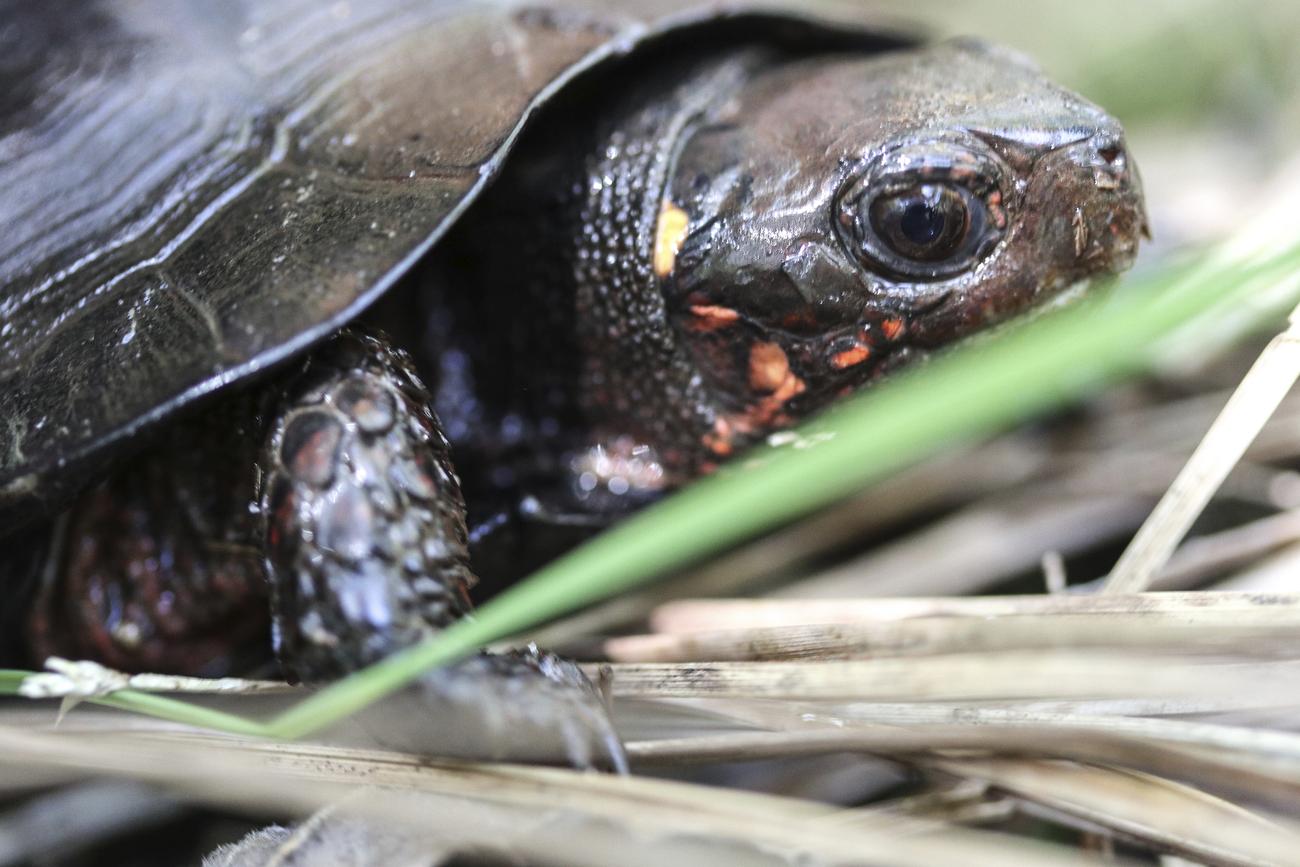
Bog turtle by U.S. Fish and Wildlife Service is licensed under CC-CC0 1.0

Some next to the proposed warehouse site survive on wells, others say bog turtles (an endangered species) live near the high-value creek which meanders near banks of wildflowers and honeysuckle…others, like me, remember driving past the open spaces, breathing in the fresh air as she picked up her small sons from their elementary school not far away.

When I first moved here 35 years ago, beautiful trees graced either side of the two-lane highway above my street. Now the trees are but a sad memory, the highway widened to four lanes—five in some places—and rush hour turns the highway into the Indy 500. School buses that once stopped at the top of the street are now forced to drop off children in front of their houses on our little cul-de-sac.

But here’s the good thing about being a writer. We get a chance to use our skills to voice our opinions, hopefully in a cogent way keeping in mind concern for the reader by crafting something understandable and relatable. Townships hold the key to zoning and school board officials (who sold the property to the developer) will follow their own greedy ineptitude but we have a voice to appeal to the greater humanity in all of us. A platform to try and save a landscape.

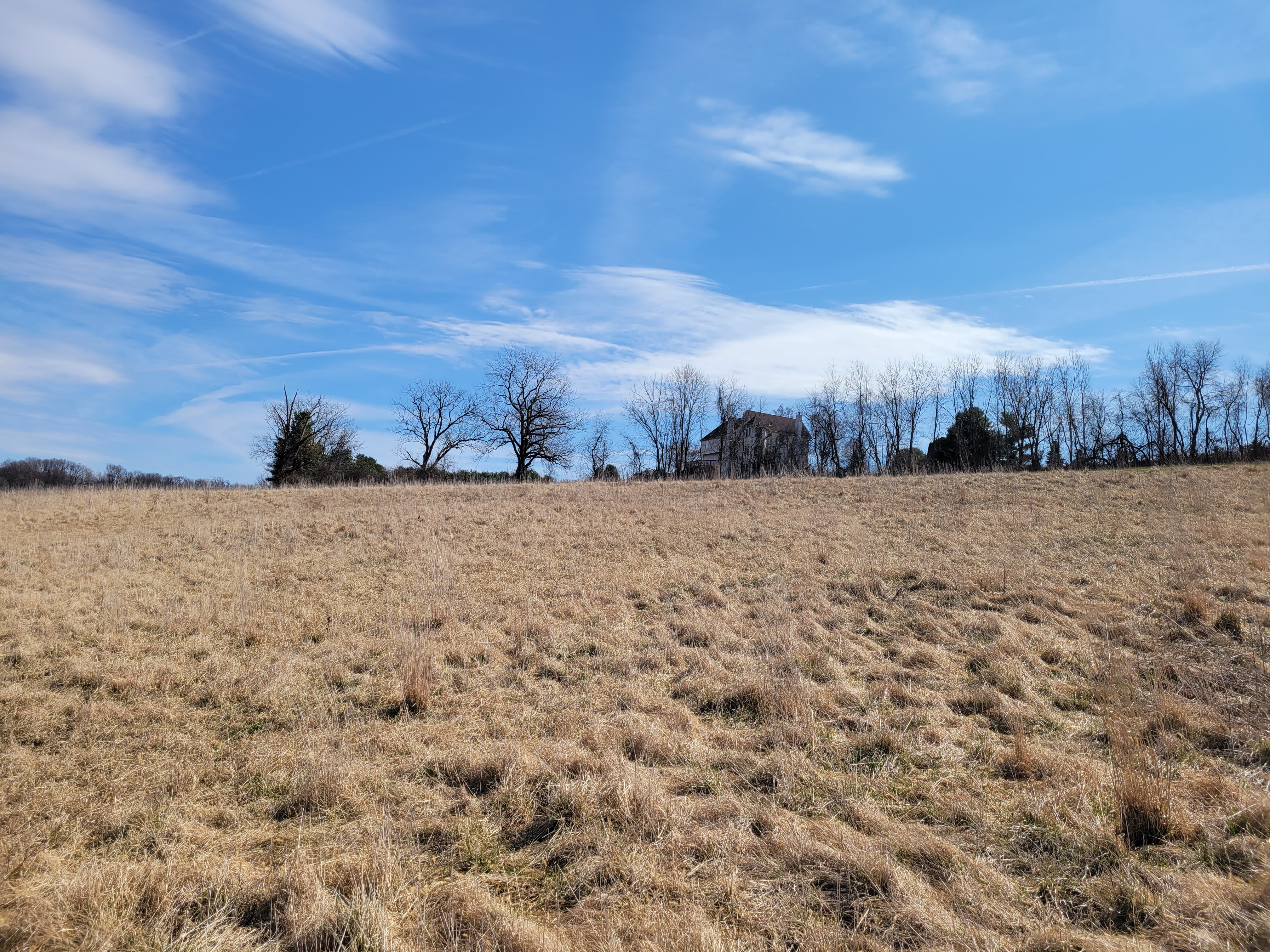
The nature writing workshop comes at a time when the countryside where I live is blossoming with greenery, a lesson in nature’s magnificent renewal and forgiveness of us for attempting to pave her over with abominations like that warehouse. I’ve been reading Braiding Sweetgrass by Robin Wall Kimmerer, which author Elizabeth Gilbert calls “a hymn to the world.”

It’s the way Kimmerer captures beauty from the smallest strawberry plant to the towering cedar that inspires how I think about the landscape and my love of nature. I’ve lived pretty much in the same area of Pennsylvania my entire life. As a reporter, I covered the unceasing development of asphalt paving over farmlands. Now, in my retirement, I’m witnessing the current hyper-construction of condos, condos, everywhere where people are jammed in like so many sardines rising to the sky. When is enough enough?

As a child, I grew up next to woods where black snakes swam in the creek in summer and monkey vines glittered in ice-covered splendor in winter. As my friend said recently referring to all the development, traffic, and obnoxious people that seem to come with it, “This is why people move off the grid to Wyoming or Montana.”

Indeed, I have had enough of the traffic, the noise, and the pollution of this once-beautiful place. Still, I hold out hope that a meadow of grass not far down the road from where I live offers respite at least this spring, if not next. But who knows when that place of solitude will surrender to the bulldozer?

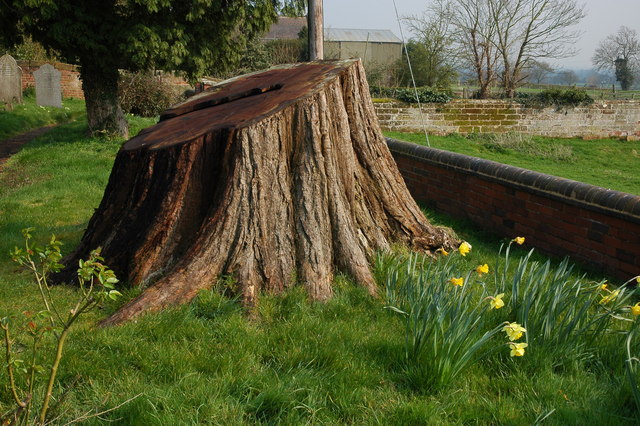
Tree stump, Rushock churchyard by Philip Halling is licensed under CC-BY-SA 2.0

At our Saturday writing workshop, I look forward to sharing our reflections on nature, its place in our lives, and how it offers lessons about who we are and what we value. Maybe, too, a little activism will permeate our writing that the gifts of this earth can’t be squandered without a price. And so, I write this, my little cry of protest and testimony of remembrance.

How about you? Have you witnessed a beloved landscape that is no more?
Seeking Answers in the Holy Land

It’s often been said that you’re a writer even when you’re not writing. Writers take in the scents, and the sounds of a bustling marketplace, an old man’s weathered and lined face as he smokes and sells his wares in a Middle Eastern souk.

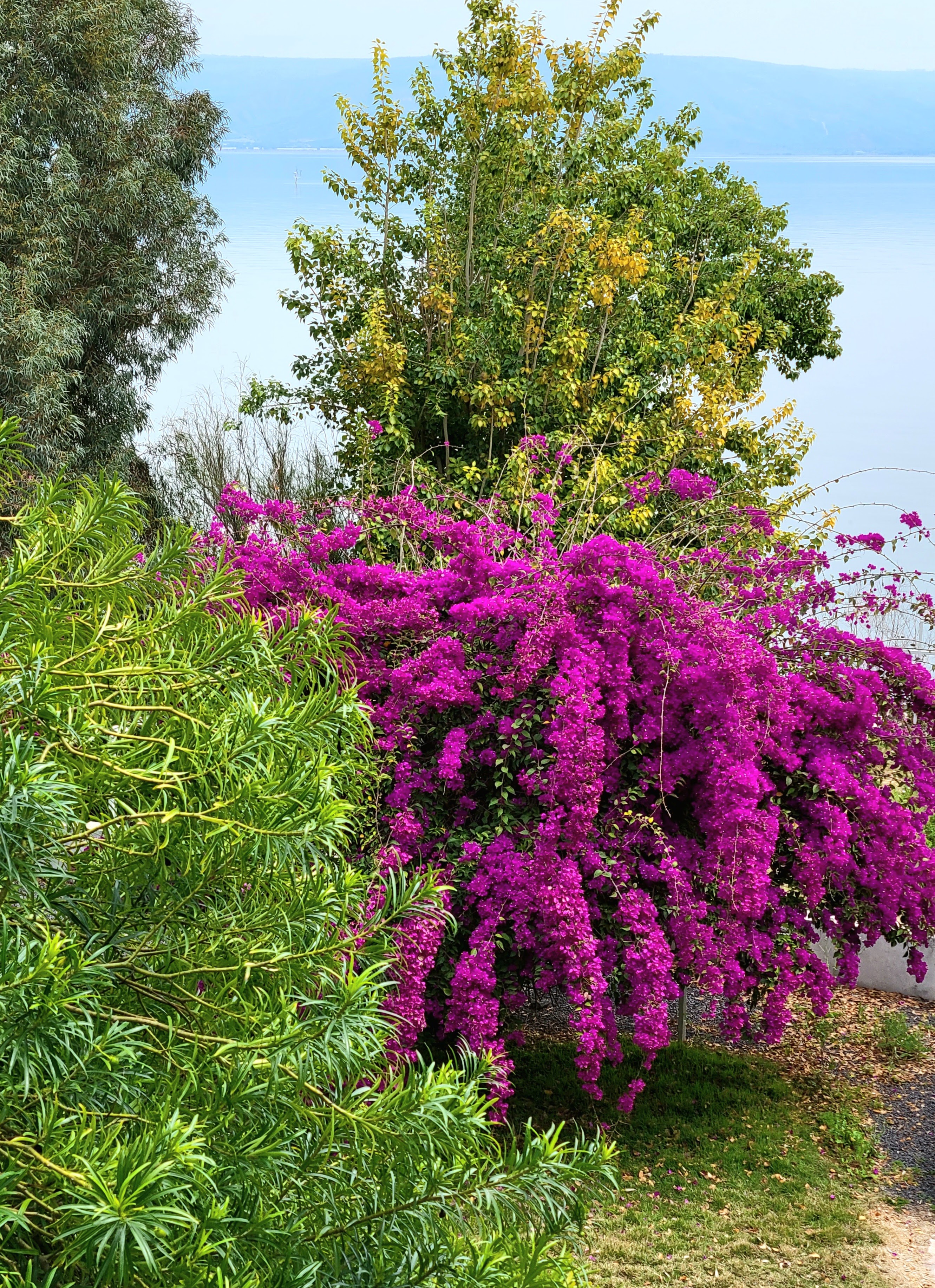
Bougainvillea blooming along the banks of the Sea of Galilee

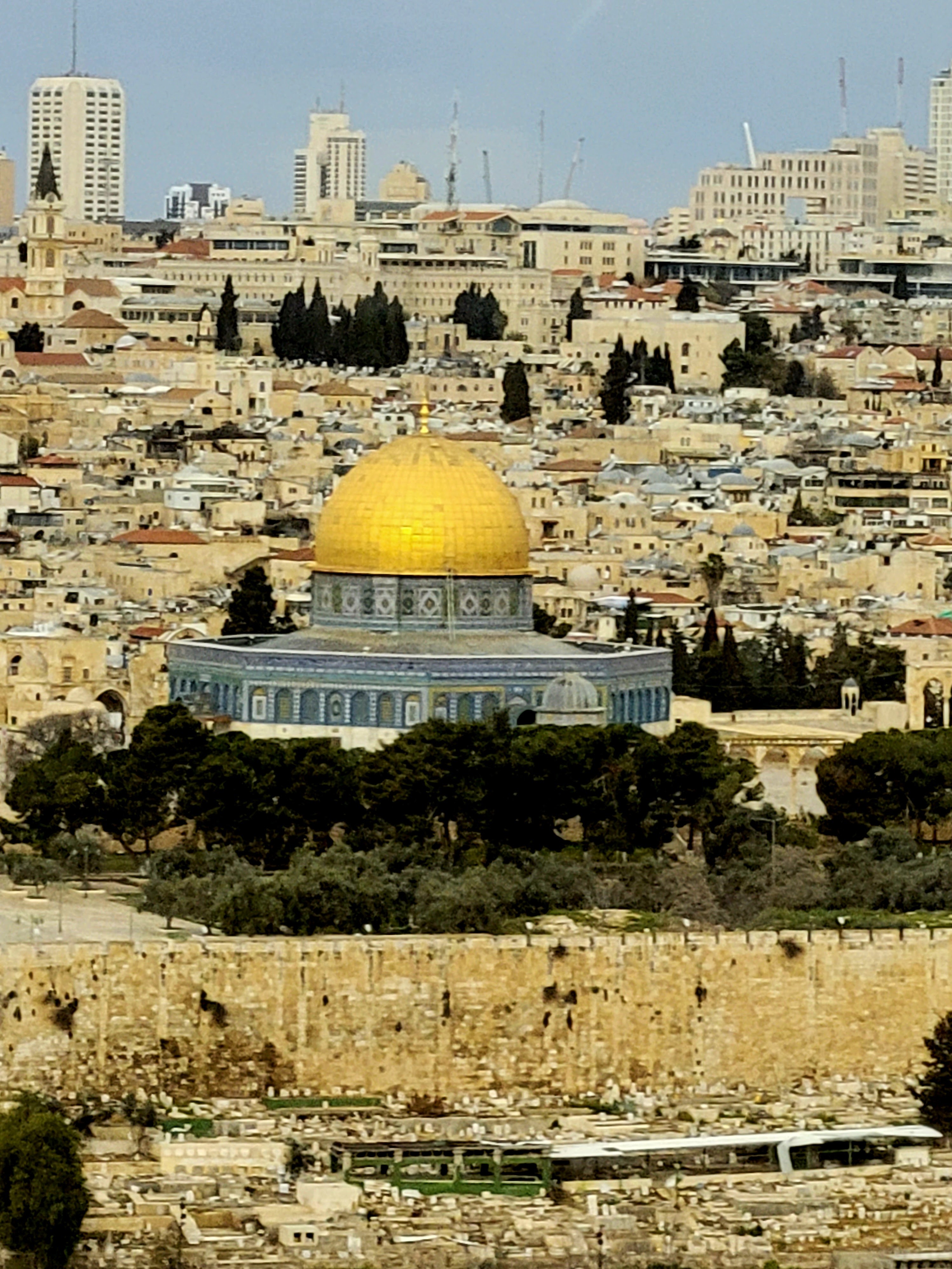
So it was with me after completing a two-week pilgrimage to the Holy Land. I am still absorbing the unfathomable, the infinite, the indefinite. As we traveled from Jerusalem to Ramallah, to Galilee, and east to the Golan Heights with its sweeping vistas of Syria, it wasn’t surprising that Israel evoked more questions than answers. This land suffers from strife and conflict like no other. From the minarets where Islamic prayer chants suffuse the air with an eerie sound like grief, to the Hasidic Jews pushing their shopping carts along the streets of the West Bank, to the hordes of Christian tourists from as far as Uganda and South America seeking to touch the untouchable, the world’s melting pot is within your grasp.

Being where Jesus walked and brought his ministry to the world seemed at times surreal. He was a figure I had seen since childhood immortalized in stained glass windows holding a lamb or symbolized by a crucifix above the church altar. Unlike some of my fellow Christians, I’m not certain I ever truly felt his presence except for when I looked into the faces of the suffering or wept at my husband’s funeral and felt the comfort of his touch. But who was he? Here, I felt the life of the real person come alive.

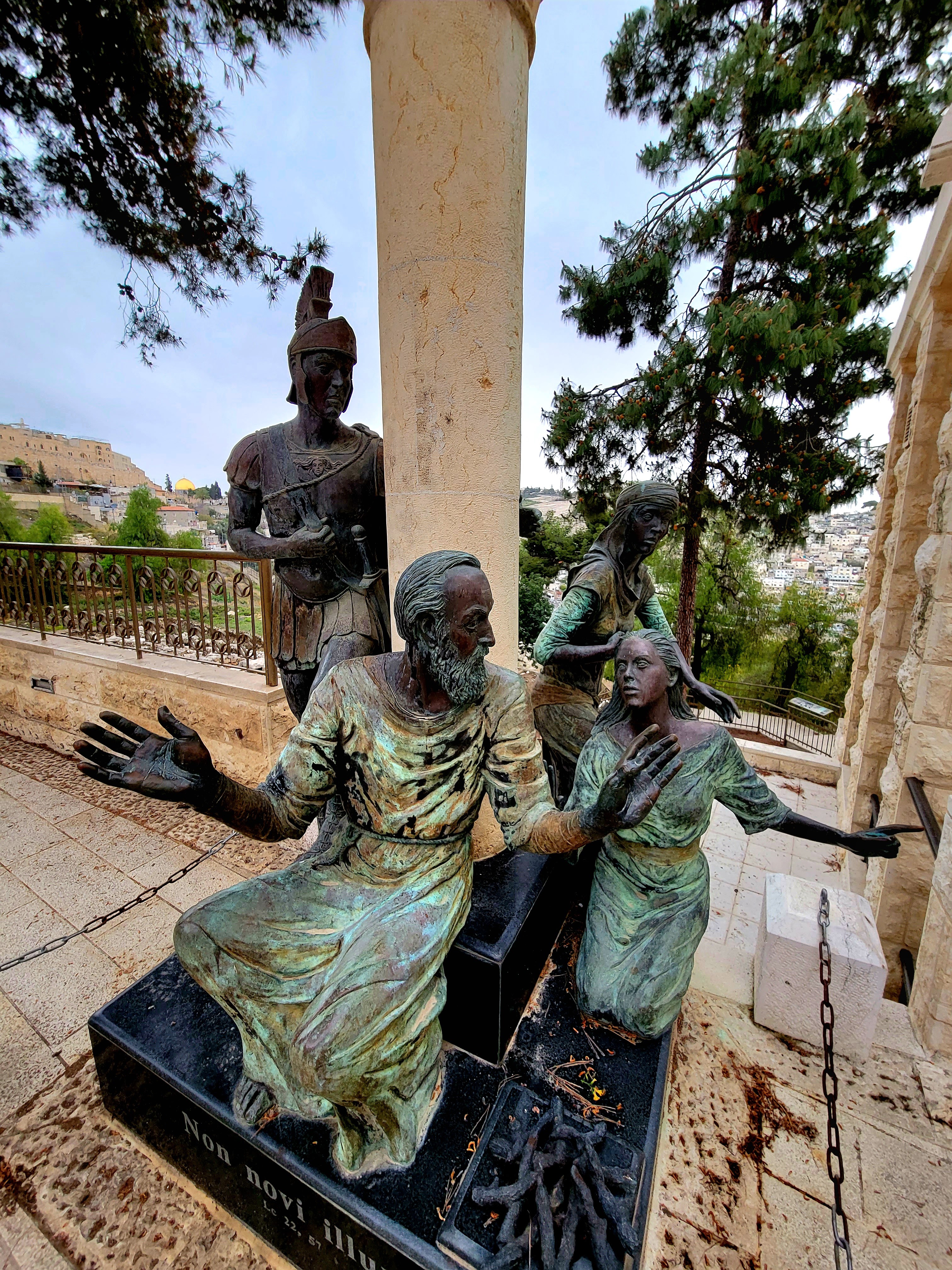
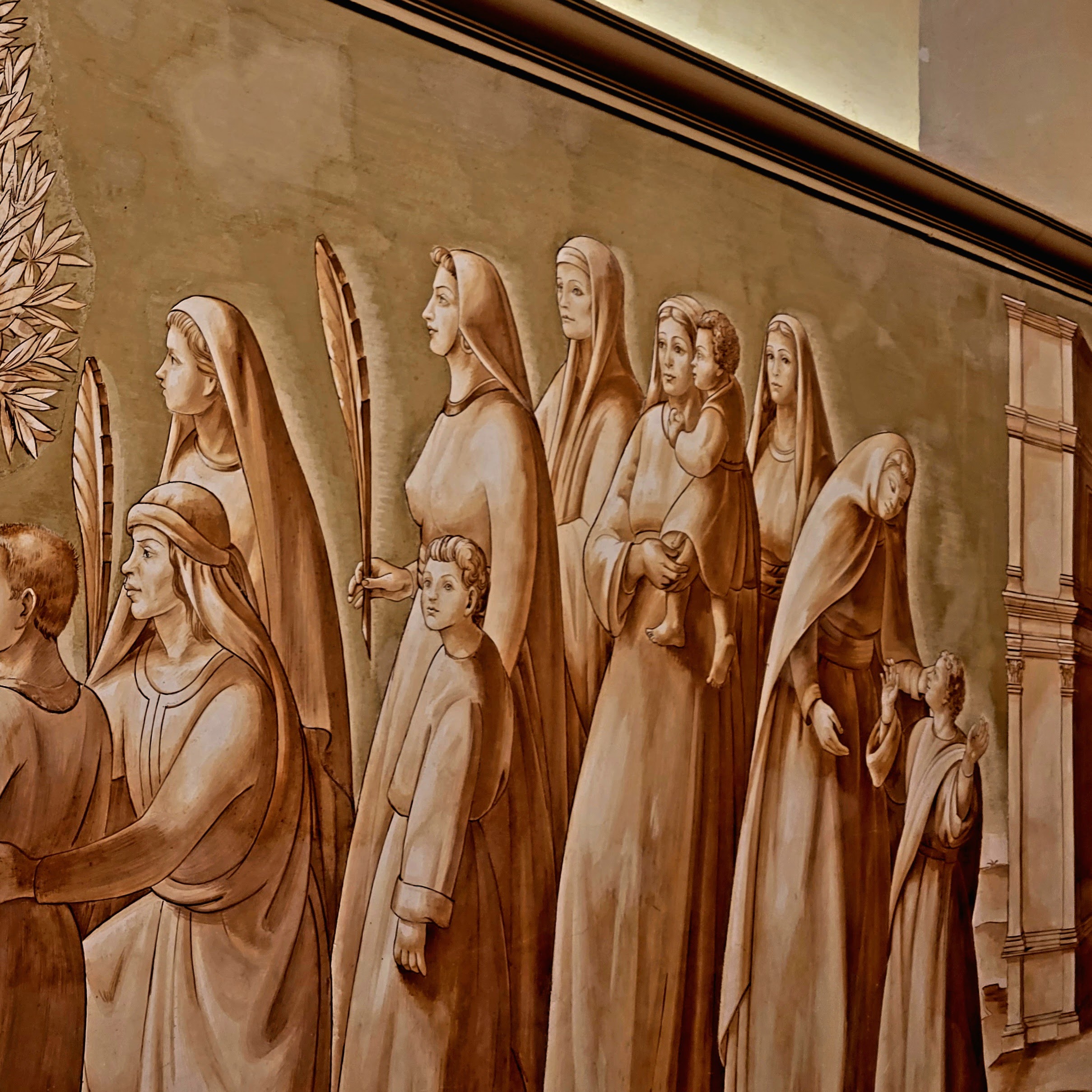
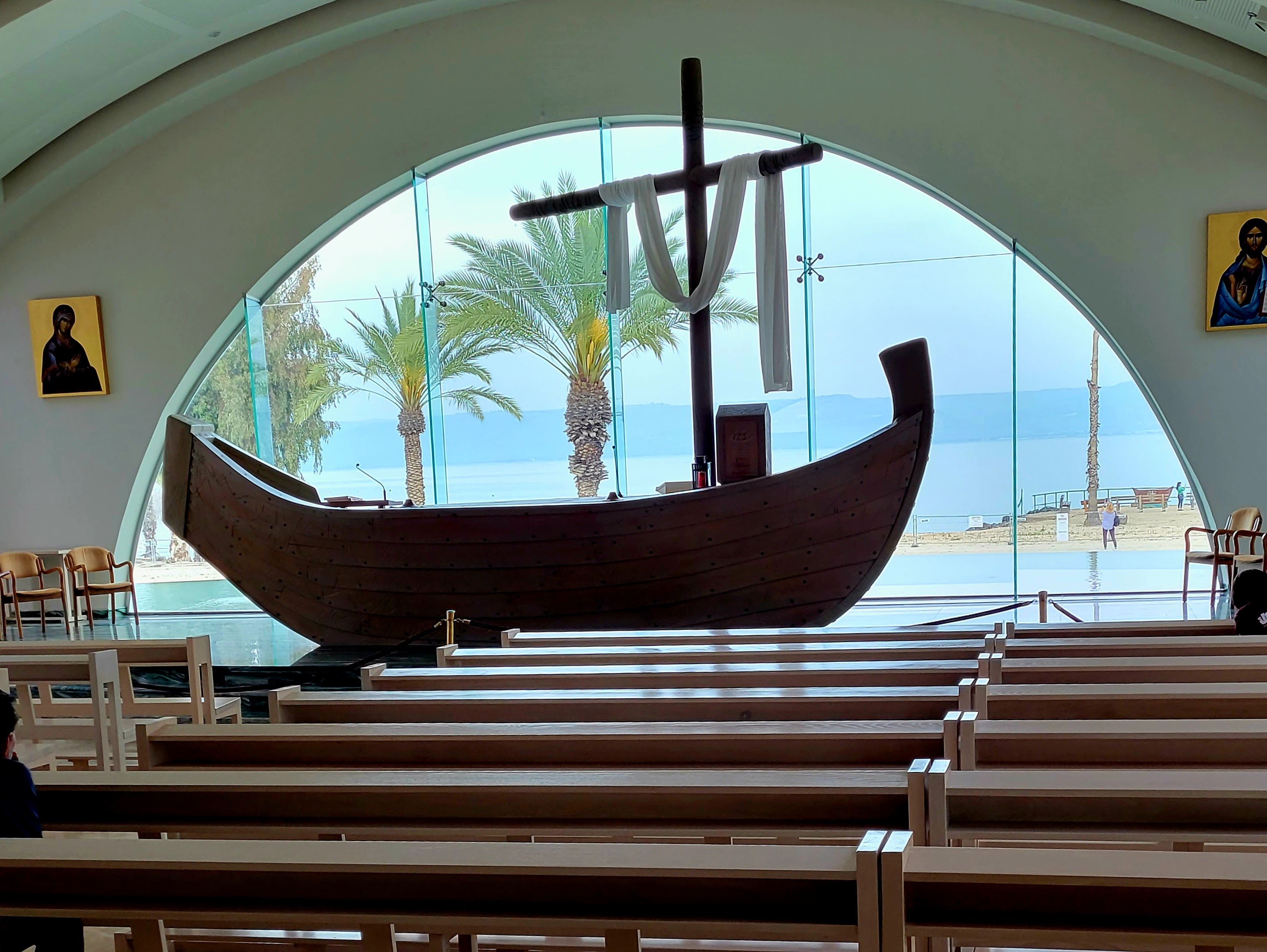
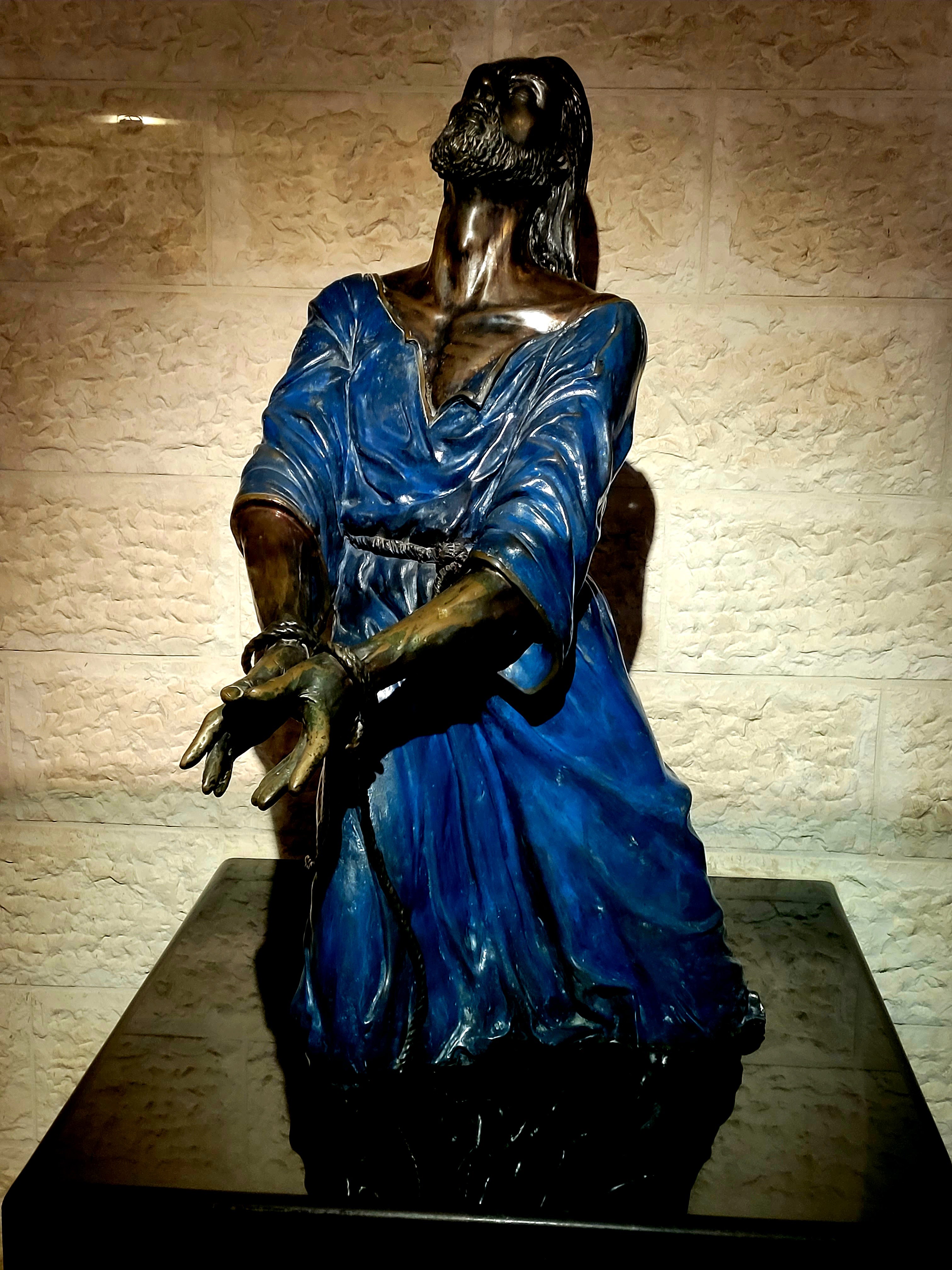
I walked down to the Jordan River and renewed my baptismal covenant in the waters where he was baptized, trod the pathway brimming with bougainvillea to the Galilee where he turned a few fishes and loaves of bread into feeding thousands, visited the cave where he may have been born, took a cable car to the top of the mountain in Jericho where a rocky ledge enshrines where he sat for forty days in loneliness and what must have been fear. I felt the presence of his mother in the church dedicated to her in Nazareth. I saw the place where he was crucified entombed inside the Church of the Holy Sepulchre. Why had it all been so hard? Even the entire country seemed made out of limestone, a hard unyielding surface of smooth and jagged rock. Why had he been tested so many times, and suffered so much?

At the same time as I was seeking spiritual answers, a world crisis was brewing as Israelis took to the streets in protest of their government’s plan to overturn its judiciary. Inside the West Bank, I walked along the wall separating the Palestinians from the Israelis, a concrete monolith of apartheid, for there is no other word. So little had changed since Jesus lived here. Strife remained paramount. The world isn’t always black and white, and the preconceived notions I had about this place became meaningless. As I visited the Western Wall, once known as the Wailing Wall, praying next to Jewish women, I realized I knew nothing.

Yet, perhaps it was the church service I attended in Ramallah a Palestinian city in the central West Bank that left me with one answer, at least. The service was conducted both in Arabic and English. As we celebrated the Eucharist in both languages, the Muslim prayers from the minarets outside our little stone church echoed as a point/counterpoint to the divergent beliefs of mankind … almost as if we were one community of believers. This was a moment to cherish.

Later, outside in a cool rain in the church courtyard, we sipped Turkish coffee. It didn’t matter that we were thousands of miles from home. This service, this fellowship was happening everywhere on this Sunday around the world. And it will continue so for another two thousand years, just as the Muslim prayer chants call its worshippers and the Western Wall my Jewish sisters. It’s not up to us to understand the mystery that is God, only to embrace it.

In Search of New Stories

At all times in my life, when I felt most down or hopeless, writing has saved me. By pouring it out on the page, I found solace and if I was lucky a little enlightenment too. The other “antidote” has been travel. The world is a journey to learn more about yourself and others. The moon over the Mediterranean and the bleached sand of the Sahara inspire poets and mystics. The Buddha gazing out upon the mountainside, the pungent incense of the temple to the gods so that you find peace and gratitude when you return.

After And the Memory Returns was published this August, my writing, except for blogging, has been at a standstill. I didn’t set aside an hour a day to write, I wrote only when the spirit moved me which felt like listening to the faint melody of a piano. I walked my dog through sunlit winter fields, read a bestseller, washed my hair, and did the laundry.

The time I went packing had arrived…time for a change of scenery in search of new stories.

That’s why I’m leaving tomorrow for the Holy Land. I had wanted to do this trip for some time and, of course, when the opportunity came up years ago I didn’t because “life” got in the way. So now, with pen and notebook in my backpack, a good novel for the plane, and the support of fellow pilgrims, I’m off to Jerusalem. Walking through Old Jerusalem the winds whisper that joy is just on the other side. The Lord is my shepherd…

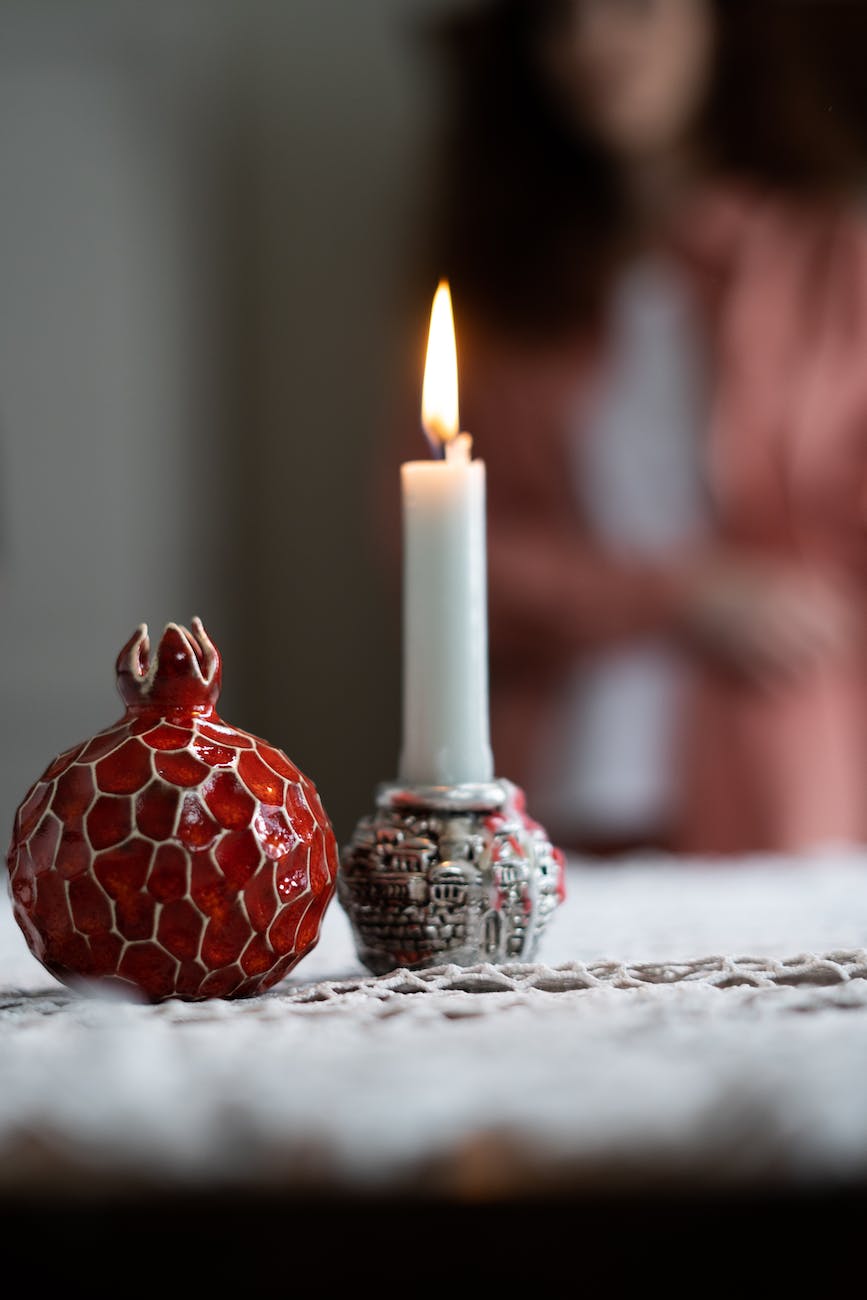
Photo by cottonbro studio on Pexels.com

As Bob Dylan once said, “wait only for my boot heels to be wandering.” No journey is complete without the soul’s desire to explore and search for meaning. I’m a writer and I can’t stop writing. I admit it. There are always more stories to write here along the writer’s way.